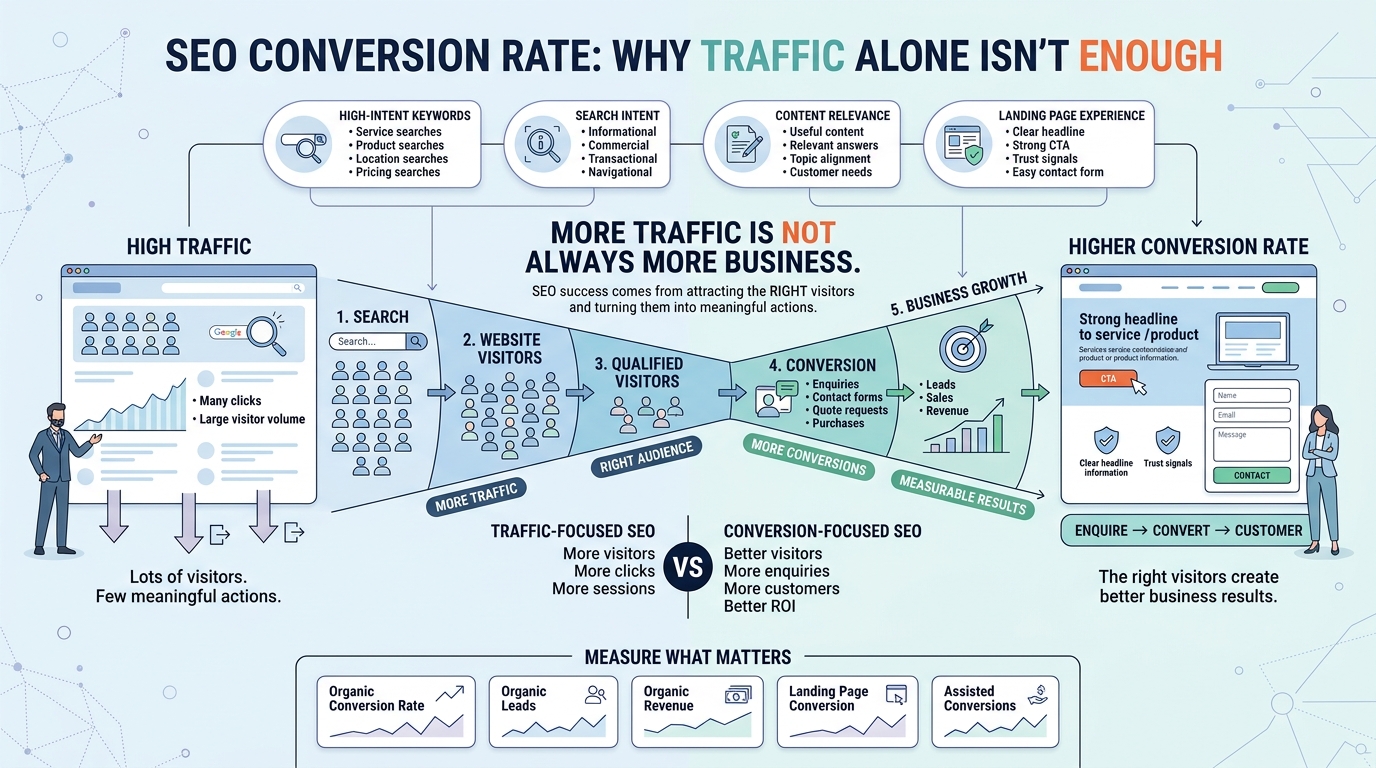
For many years, SEO was heavily focused on keywords. Website owners would try to include exact keywords as many times as possible in their content, believing this was the main factor that influenced rankings on Google. While keywords are still important, SEO has evolved significantly.
Today, search engines are much smarter. Instead of only looking at keywords, they focus on understanding what the user actually wants when they type a query. This concept is known as search intent.
Search intent has become one of the most important ranking factors in modern SEO. Websites that understand and match search intent often perform better than those that only focus on keyword usage.
In this article, we will explore why search intent matters more than keywords and how businesses can use it to improve their SEO performance.
What Is Search Intent?
Search intent refers to the reason behind a user’s search query. It explains what the user is trying to achieve when they type something into Google.
There are four main types of search intent:
1. Informational Intent
The user is looking for information or answers to a question.
Example: “What is SEO?” or “How does Google ranking work?”
2. Navigational Intent
The user is trying to find a specific website or brand.
Example: “Facebook login” or “IO Web Studio website”
3. Commercial Intent
The user is researching before making a decision.
Example: “best SEO tools” or “website design company Malaysia”
4. Transactional Intent
The user is ready to take action, such as buying or hiring.
Example: “hire SEO expert” or “buy website design service”
Understanding these categories helps content creators build pages that match what users actually want.
Why Keywords Alone Are No Longer Enough
Keywords still play a role in SEO, but they no longer guarantee high rankings.
In the past, websites could rank by repeating keywords multiple times. Today, Google uses advanced algorithms that analyze meaning, context, and user satisfaction.
This means that even if a page uses the right keywords, it may still not rank well if it does not match search intent.
For example, if a user searches for “best SEO tools,” they expect a list or comparison, not a long explanation of what SEO is.
If the content does not match what the user expects, they will leave the page quickly, which signals to Google that the content is not helpful.
How Google Understands Search Intent
Google uses artificial intelligence and machine learning systems to interpret search queries. Instead of matching exact words, it looks at:
- user behavior patterns
- previous search history
- click-through rates
- time spent on pages
- content structure and relevance
These signals help Google determine whether a page satisfies the user’s intent.
As a result, content that fully answers the user’s question tends to rank higher, even if it does not have perfect keyword usage.
Why Search Intent Improves SEO Performance
1. Better User Experience
When content matches user intent, visitors find what they are looking for quickly. This improves satisfaction and reduces bounce rates.
2. Higher Engagement
Pages that match intent often receive:
- longer time on page
- more interactions
- higher click-through rates
These engagement signals help improve rankings over time.
3. Improved Conversion Rates
When users find exactly what they need, they are more likely to take action, such as:
- filling out a form
- making a purchase
- contacting a business
This makes search intent important not only for SEO but also for business growth.
4. Stronger Content Relevance
Search intent helps content creators stay focused on what the user actually needs instead of just inserting keywords.
This results in more natural, useful, and structured content.
Common Mistakes When Ignoring Search Intent
Many websites still fail to rank because they focus only on keywords and ignore intent. Some common mistakes include:
1. Wrong Content Format
Writing an article when users expect a list, guide, or comparison.
2. Too Much Keyword Focus
Overusing keywords without providing meaningful answers.
3. Misleading Titles
Creating titles that attract clicks but do not match the content.
4. Lack of Depth
Not fully answering the user’s question or solving their problem.
How to Optimize Content for Search Intent
1. Analyze Top Search Results
Before writing content, check what type of pages are already ranking. Are they blog posts, product pages, or guides?
This helps you understand what Google considers relevant.
2. Identify User Purpose
Ask yourself:
- What is the user trying to achieve?
- Are they learning, comparing, or buying?
3. Match Content Format
If users want:
- lists → create list articles
- guides → create step-by-step explanations
- comparisons → create comparison tables
4. Provide Complete Answers
Do not just include keywords. Make sure the content fully solves the user’s problem.
5. Use Keywords Naturally
Keywords should support the content, not dominate it. Focus on clarity and readability.
Search Intent vs Keywords: Key Difference
Keywords are what users type.
Search intent is what users mean.
This difference is important because:
- keywords bring traffic
- search intent determines ranking success
A page with fewer keywords but strong intent alignment can outrank pages with heavy keyword usage.
Real Example of Search Intent in Action
If someone searches for:
“best website design company”
They are not looking for:
- history of web design
- definition of websites
- technical coding explanation
They want:
- service comparisons
- pricing
- recommendations
A page that understands this intent will perform better than one that only focuses on keywords.
The Future of SEO Is Intent-Based
Search engines are becoming more advanced, and SEO is shifting toward understanding user behavior rather than just keyword matching.
Future SEO success will depend on:
- content quality
- user satisfaction
- intent matching
- topic relevance
Websites that continue focusing only on keywords will struggle to compete.
Conclusion
Search intent has become more important than keywords in modern SEO because it focuses on what users actually want, not just what they type.
While keywords are still part of SEO, they are no longer the main factor for success. Understanding search intent allows businesses to create more relevant, helpful, and engaging content.
By focusing on intent, websites can improve rankings, attract better traffic, and increase conversions.
In today’s SEO landscape, success is no longer about how many keywords you use, but how well you understand your audience.
FAQs
1. What is search intent in SEO?
Search intent is the reason behind a user’s search query. It explains what the user wants to achieve, such as learning, comparing, or buying something.
2. Why is search intent important for SEO?
Search intent is important because Google ranks pages based on how well they satisfy user needs, not just keyword usage.
3. Can keywords still help SEO?
Yes, keywords are still important, but they must be used in a way that supports search intent rather than replacing it.
4. How do I optimize for search intent?
You can optimize for search intent by analyzing search results, understanding user goals, choosing the right content format, and providing complete answers.
5. What is the difference between keywords and search intent?
Keywords are the words users type into search engines, while search intent is the purpose behind those words.