Search engine optimization has evolved significantly over the years. While keywords remain important, modern search engines have become increasingly focused on understanding why users perform searches rather than simply matching words on a page.
This concept is known as search intent. Understanding search intent allows businesses to create content that better meets user expectations, resulting in improved rankings, stronger engagement, and higher conversion rates.
For websites looking to improve their SEO performance, aligning content with search intent is now one of the most important aspects of a successful digital marketing strategy.
What Is Search Intent?
Search intent refers to the purpose behind a user’s search query.
When someone enters a search term into a search engine, they are typically looking to accomplish a specific goal. Search engines attempt to understand that goal and provide the most relevant results.
Modern SEO is no longer just about targeting keywords. It is about understanding what users want and creating content that satisfies those needs.
The Four Main Types of Search Intent
Informational Intent
Users with informational intent are looking for knowledge or answers.
Examples include:
- What is SEO?
- How does search intent work?
- Benefits of content marketing
These users want educational content that helps them understand a topic.
Navigational Intent
Users with navigational intent want to reach a specific website or page.
Examples include:
- OpenAI website
- Google Search Console login
- SEOYV blog
The goal is to locate a known destination quickly.
Commercial Intent
Users with commercial intent are researching products or services before making a decision.
Examples include:
- Best SEO agency
- SEO services comparison
- Website design reviews
These users are evaluating options and often move closer to a purchase decision.
Transactional Intent
Users with transactional intent are ready to take action.
Examples include:
- Hire SEO consultant
- Buy website hosting
- Request SEO audit
Content targeting transactional intent should make it easy for users to complete their desired action.
Why Search Intent Matters for SEO
Search engines aim to provide users with the most relevant results possible.
If your content matches search intent effectively, it is more likely to:
- Rank higher in search results
- Generate qualified traffic
- Improve user engagement
- Increase conversions
Content that fails to satisfy search intent often struggles to perform well, even when keyword optimization is strong.
Search Intent Improves User Experience
Search engines increasingly prioritize user experience.
When users find exactly what they need, they are more likely to:
- Stay on the website longer
- Explore additional pages
- Engage with content
- Return in the future
Positive user behavior sends valuable signals that can support long-term SEO performance.
Better Search Intent Alignment Increases Conversions
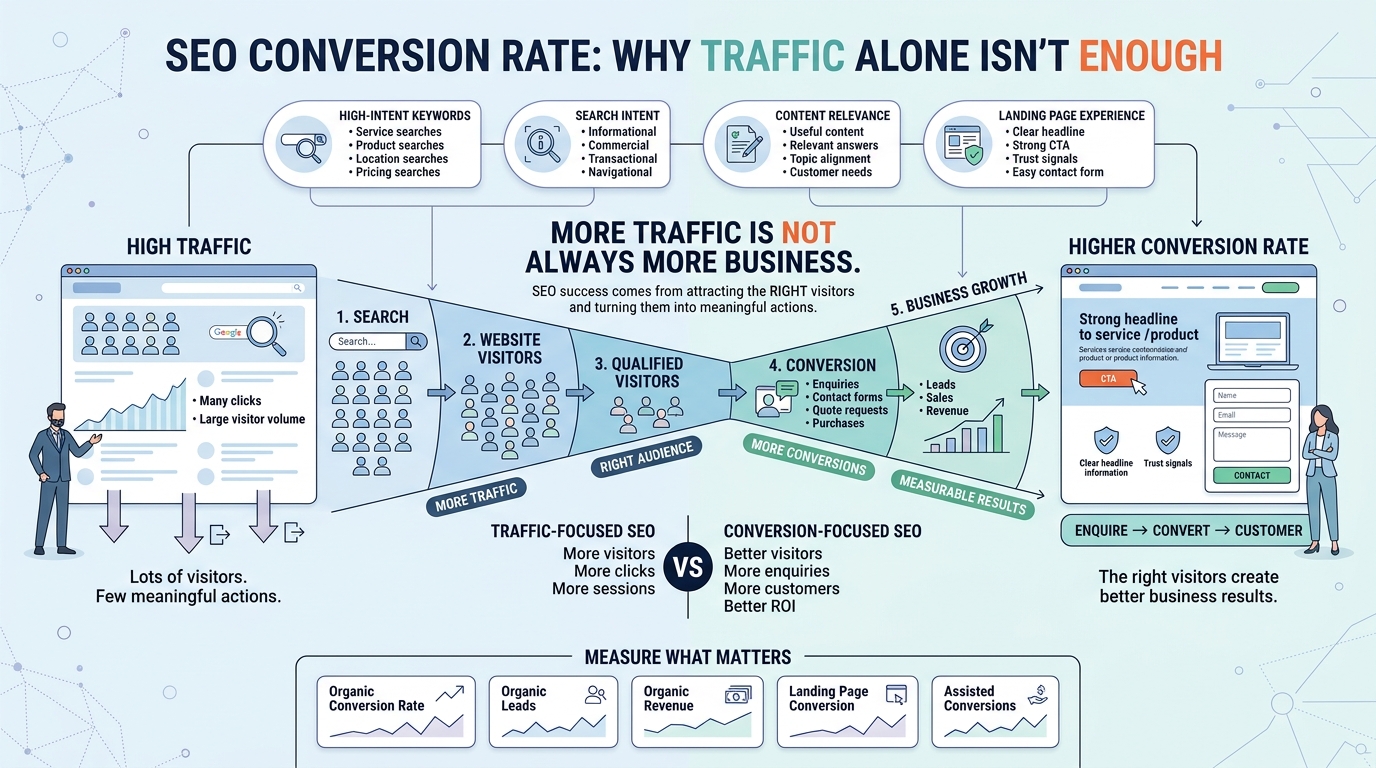
Traffic alone does not guarantee business growth.
A website that attracts visitors with the wrong intent may generate little value.
By targeting content to users at different stages of the customer journey, businesses can attract visitors who are more likely to:
- Request quotations
- Submit enquiries
- Contact the company
- Purchase products or services
Intent-focused content often produces higher-quality leads.
Common Search Intent Mistakes
Many websites struggle with SEO because their content does not align with user expectations.
Common mistakes include:
❌ Targeting the wrong keywords
❌ Creating sales-focused pages for informational searches
❌ Publishing educational content for transactional keywords
❌ Ignoring user needs
❌ Focusing solely on keyword volume
These issues can limit visibility and reduce engagement.
How to Optimize Content for Search Intent
Businesses can improve search intent alignment by:
- Understanding audience needs
- Analyzing search results
- Creating relevant content formats
- Using clear page structures
- Updating content regularly
- Matching calls-to-action to user intent
A strategic content approach helps improve both rankings and user satisfaction.
The Relationship Between Search Intent and Content Strategy
Successful SEO strategies focus on creating content for different stages of the customer journey.
This may include:
- Educational blog posts
- Product comparisons
- Service pages
- Case studies
- Landing pages
Together, these content types help attract users with varying levels of intent and support long-term organic growth.
Why Search Intent Will Continue to Shape SEO
As search engines become more sophisticated, understanding user behavior will remain a priority.
Businesses that focus on delivering relevant, helpful content aligned with search intent are better positioned to:
✔ Improve rankings
✔ Increase engagement
✔ Build authority
✔ Generate qualified leads
✔ Achieve sustainable SEO growth
Search intent is no longer optional. It is a core component of modern SEO success.
Conclusion
Search intent plays a critical role in modern SEO rankings. By understanding why users search and creating content that satisfies their needs, businesses can improve visibility, attract more relevant traffic, and increase conversion opportunities.
A successful SEO strategy focuses not only on keywords but also on delivering the right content to the right audience at the right stage of their journey.
More Info
Learn more about SEO services:
https://seoyv.com/
Explore SEO articles:
https://seoyv.com/#articles
Google Search Central:
https://developers.google.com/search/docs
FAQs
1. What is search intent in SEO?
Search intent is the purpose behind a user’s search query and what they hope to achieve when searching online.
2. Why is search intent important for SEO?
Search intent helps search engines determine which content is most relevant, making it a key factor in rankings and user engagement.
3. What are the four types of search intent?
The four main types are informational, navigational, commercial, and transactional intent.
4. How can I identify search intent?
You can analyze search results, user behavior, and keyword context to understand what users are looking for.
5. Does search intent affect conversions?
Yes. Matching content to user intent often attracts more qualified visitors and improves conversion opportunities.