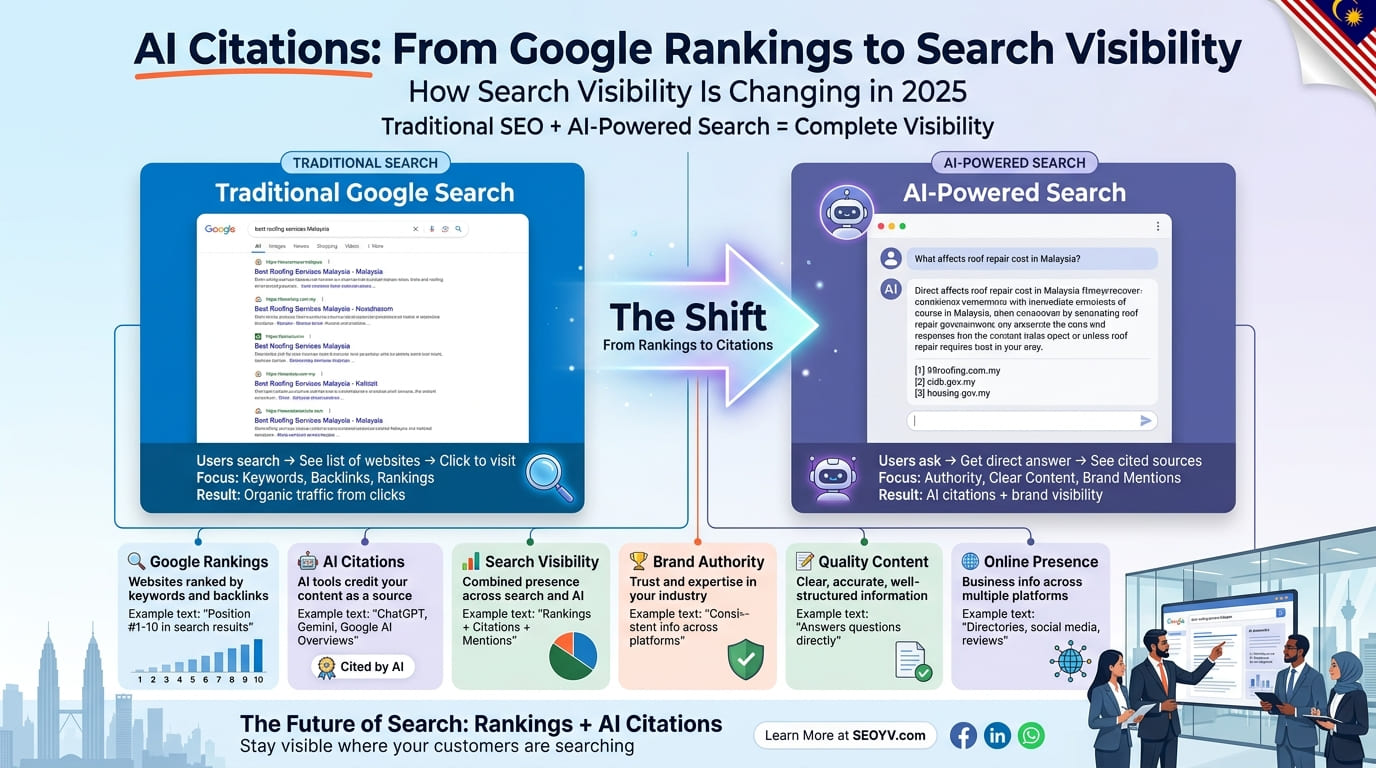
Search visibility is changing. AI citations are now a big part of how businesses show up online. For many years, businesses worked hard to rank on Google. Good rankings brought more traffic. They also brought more customers.
But AI search is changing things. Tools like ChatGPT and Google AI Overviews give direct answers. They pull information from many sources. Users do not always need to visit a website.
So businesses must think beyond Google. Today, visibility means more than rankings. It also means brand mentions, authority, and AI citations.
What Are AI Citations?
AI citations happen when an AI tool credits a source. The AI uses that source to build its answer. In short, your content becomes part of the reply.
AI search does not show a list of links. It gives one direct answer. This changes how people use search. They may skip websites completely. Instead, they trust the AI reply.
AI citations help businesses in a few ways:
-
More brand exposure – Your name shows up in AI answers.
-
New audiences – People who never found you before may now see your brand.
-
Support for AI answers – Your content becomes a source AI tools rely on.
-
Wider AI visibility – Your brand appears across many AI platforms.
-
More website visits – Users who want details may click through.
As AI search grows, citations may matter as much as rankings. Businesses that adapt early can win.
How Traditional Google Rankings Work
Traditional SEO helps webpages rank high in search results. This has been the main method for years.
Most businesses optimize their sites for:
-
Keywords – Terms people search for.
-
Search intent – What users really want.
-
Site structure – Clear and tidy content.
-
Technical SEO – Fast, safe, and easy-to-scan pages.
-
Quality content – Useful and correct information.
-
Backlinks – Links from trusted sites.
-
User experience – A site that is easy to use.
A strong site can rank higher on Google. That brings more organic traffic. It also builds brand trust.
But users now turn to AI tools for quick answers. They skip long lists of results. So rankings alone are not enough. Businesses need new ways to stay visible.
How AI Search Is Changing Online Visibility
AI search changes how people get information.
The old journey looked like this:
Search query → Results → Website
The new journey looks like this:
Question → AI answer → Sources
So businesses must ask a key question. Can AI tools find and use their content? Clear and tidy content is more likely to be cited. For example, pages with clear headings do better.
A strong Google rank still helps. But it is not the only path. Businesses that adapt to AI search may find fresh ways to reach buyers.
Why Search Rankings Still Matter
AI search does not make traditional SEO useless.
Search engines are still a top source of information. Strong SEO basics help sites build a solid presence. In fact, many AI tools rely on search engines. So good SEO can also boost AI visibility.
Businesses should keep working on:
-
Site performance – Fast, safe, mobile-friendly pages.
-
Quality content – Useful and correct writing.
-
Relevant keywords – Terms that match searches.
-
Search intent – What users want to find.
-
Internal links – Connect related pages on your site.
-
Accessibility – Make content open to all users.
-
Mobile optimization – Ensure the site works on phones.
-
Trusted info – Content that shows real expertise.
Traditional SEO is the base for wider visibility. Without it, ranking in both search types is harder.
Build Content That AI Can Understand
Clear content helps both users and search systems. It makes information easy to find.
Businesses should write content that:
-
Answers real questions – Solve common customer queries.
-
Uses clear headings – Break content into short sections.
-
Stays accurate – Keep facts correct and fresh.
-
Explains fully – Cover topics in enough depth.
-
Adds facts and examples – Support points with proof.
-
Shows expertise – Prove you know your field.
-
Cuts repetition – Keep content tight and short.
Tidy content helps users find answers fast. It also builds a stronger base for search. As a result, AI tools are more likely to cite clear pages.
Strengthen Your Brand’s Online Presence
AI visibility does not depend on one website.
Info about a business can appear in many places. These include:
-
Business directories – Listings on Google Business Profile and others.
-
Industry sites – Mentions in trade publications.
-
Social media – Active pages on LinkedIn and Facebook.
-
Review sites – Customer reviews and ratings.
-
Company profiles – Same branding across platforms.
-
News sites – Media coverage and press releases.
-
Trade publications – Articles in industry magazines.
Consistent info across these sites builds a clearer digital footprint. When AI tools gather data, they may pull from many sources. So accurate details matter everywhere.
Businesses should keep their name, services, and location correct. Outdated info can hurt trust and visibility.
Create Content That Provides Original Value
Businesses should not rely only on generic content. That type of content is everywhere.
Original content adds real value through:
-
Industry insights – Unique views on your field.
-
Original research – Data you gathered yourself.
-
Case studies – Real examples of your work.
-
Expert explanations – Deep analysis from pros.
-
Statistics – Useful data that backs your points.
-
Practical examples – Real-world uses of your ideas.
-
FAQs – Answers to common customer questions.
Useful and specific content builds stronger authority. Unique content is more likely to be cited by AI. It is also more useful to readers.
Improve Your Website’s Technical Foundation
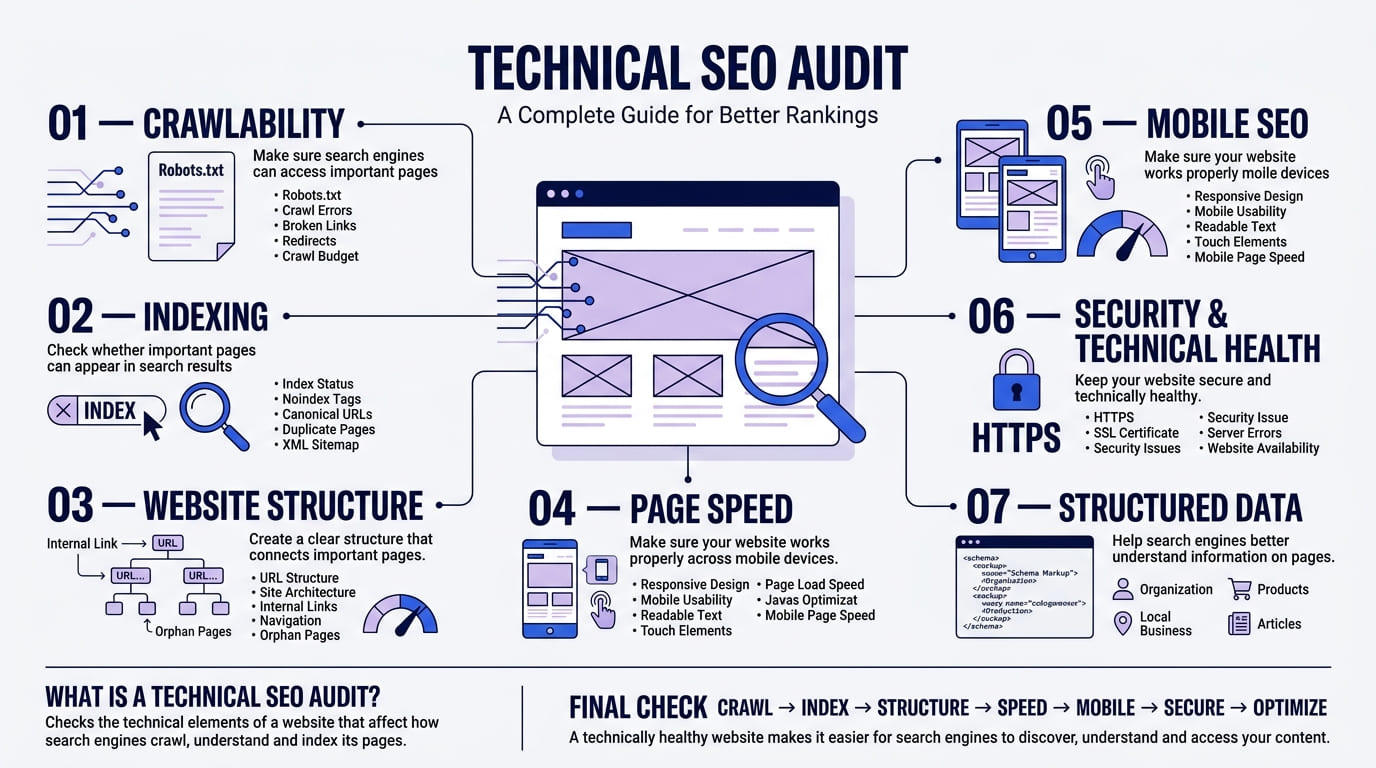
Technical SEO still matters as search becomes more AI-driven.
Businesses should make sure their sites are:
-
Easy to crawl – Search engines can find and index pages.
-
Mobile-friendly – Works well on all devices.
-
Fast-loading – Loads quickly for users.
-
Secure – Uses HTTPS and follows best practices.
-
Well-structured – Uses headings, schema, and clean code.
-
Easy to navigate – Users can find info quickly.
-
Accessible – Content is open to all users and search engines.
A strong technical site gives a better base. It helps both traditional and AI search. Without it, even great content may stay hidden.
Monitor AI Search Visibility
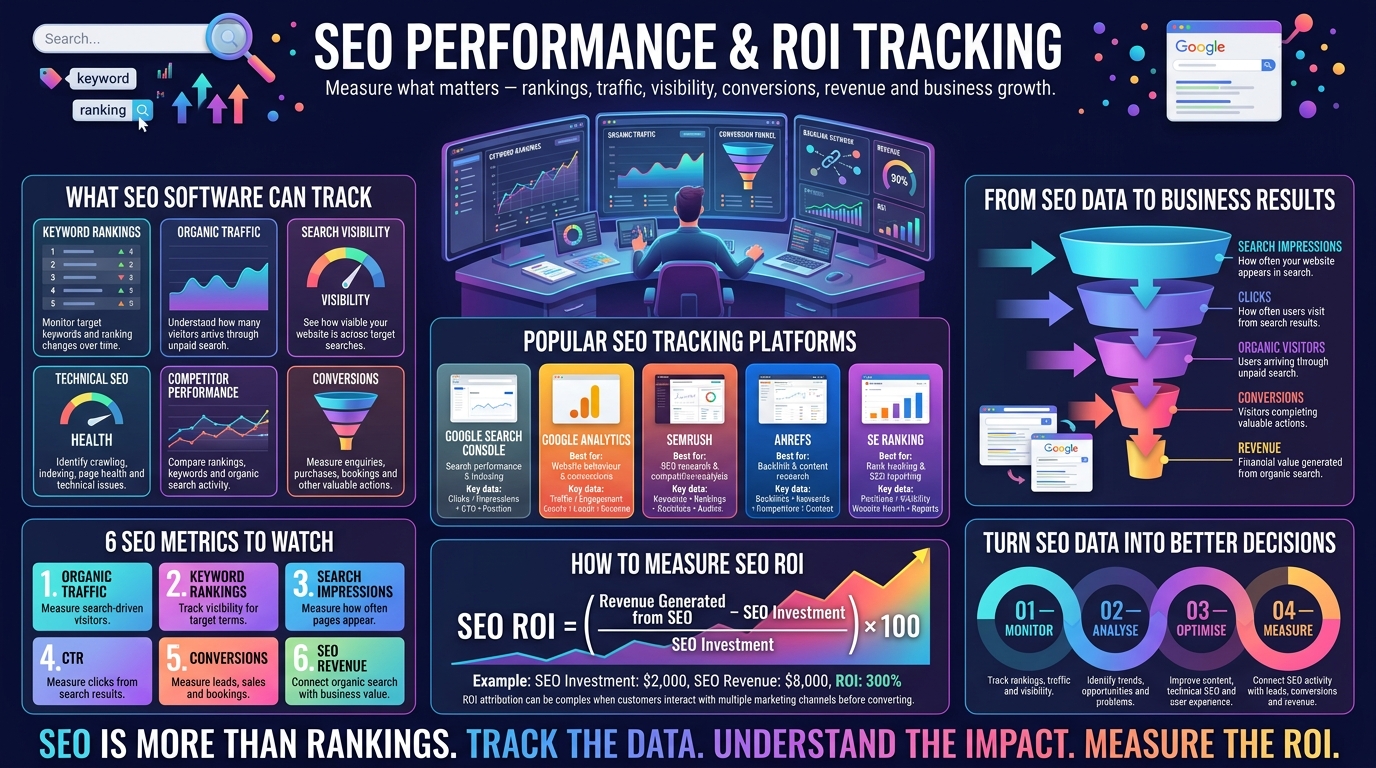
Traditional SEO reports focus on metrics like:
-
Keyword rankings – Where your site shows in results.
-
Organic traffic – Visitors from search engines.
-
Click-through rates – How often users click your links.
-
Impressions – How often your site appears in results.
-
Search positions – Your rank for certain queries.
As AI search grows, businesses can track AI answers too. This gives a fuller view of visibility.
Businesses can monitor:
-
Brand mentions – Where your brand shows up online.
-
AI citations – When AI tools cite your content.
-
Competitor mentions – How rivals appear in AI answers.
-
Questions you appear in – Topics where you are cited.
-
Sources AI platforms use – What content AI tools pull from.
-
Topics linked to your brand – Subjects tied to your business.
This gives extra insight into how buyers find you. It also helps you track your spot in the changing search world.
From Rankings to Broader Search Visibility
The future of visibility is wider than rankings alone.
Businesses now need to watch several areas:
✔ Google rankings – Your spot in search results.
✔ Organic traffic – Visitors from search engines.
✔ Brand mentions – How often your brand appears online.
✔ Online authority – Trust and skill in your field.
✔ AI visibility – How your brand shows in AI answers.
✔ AI citations – When AI tools cite your content.
A strong digital presence keeps businesses visible as search shifts. Firms that focus on many areas adapt better.
Why Businesses Should Adapt to AI Search
Adapting to AI search helps firms prepare for change.
Key areas to focus on include:
✔ Useful content – Content that answers questions and adds value.
✔ Brand authority – Build trust in your industry.
✔ Consistent info – Keep details accurate across platforms.
✔ Technical SEO – A strong base for your website.
✔ Original insights – Unique content that stands out.
✔ AI visibility tracking – Watch how your brand shows in AI answers.
✔ Strong traditional SEO – Keep ranking well on Google.
Firms that build strength in these areas are better prepared. Early action can give a real edge.
Conclusion
Search visibility is shifting. It is moving from plain Google rankings to a wider digital presence. AI citations are now a key part of online visibility. Companies that adapt may find new ways to reach buyers.
Traditional SEO still matters. But firms now have a new chance to appear in AI answers. This comes through brand mentions and citations. By writing useful content, keeping details accurate, improving site speed, and building authority, businesses can prep for change.
The future of search is not just about rank. It is also about how your brand is found and cited. Firms that embrace this shift can stay visible as search keeps changing.
FAQs
1. What are AI citations?
AI citations happen when an AI tool credits a source. The AI uses that source to build its answer. This can help businesses boost brand exposure and visibility.
2. How is AI search different from traditional Google search?
Traditional Google search shows a list of sites. AI search gives one direct answer. It pulls from many sources. Users may not click through to websites. Instead, they trust the AI reply.
3. Do Google rankings still matter?
Yes. Traditional SEO still matters. It gives a base for wider visibility. Many AI tools rely on search engines and indexed content.
4. How can businesses improve their AI visibility?
Firms can improve AI visibility by writing clear content. They can also boost their brand’s online presence, publish original insights, improve technical SEO, and track AI visibility.
5. What type of content is more likely to be cited by AI?
Content that answers real questions is more likely to be cited. This includes pages with clear headings, correct facts, and examples. Content that shows real expertise also does well.