Digital marketing strategies often divide search engine marketing into two distinct channels: organic Search Engine Optimisation (SEO) and paid Search Engine Advertising (Google Ads). Many businesses view these channels as competing options, treating them as an either-or decision when allocating marketing budgets.
However, viewing SEO and Google Ads as separate efforts often leads to missed growth opportunities and inefficient ad spend. While SEO provides sustainable long-term organic visibility, Google Ads delivers immediate traffic and precise targeting capabilities.
Combining paid search and organic SEO strategies allows businesses to dominate search engine results pages, lower overall customer acquisition costs, and maximize return on investment (ROI). Instead of working in isolation, paid and organic channels can feed valuable data to one another, creating an integrated search marketing engine.
Understanding SEO and Google Ads
To build an integrated search strategy, it is essential to first understand how SEO and Google Ads function independently, as well as the unique advantages each channel brings to a digital marketing campaign.
SEO is the practice of optimizing website content, technical architecture, and authority to rank higher in organic search results naturally. Google Ads, on the other hand, is a pay-per-click (PPC) advertising platform that allows businesses to bid on specific keywords to display sponsored ads at the top of search result pages.
Key characteristics of SEO:
- Earning non-paid
- Organic rankings
- Requires time
- Delivers long-term sustainable traffic
- Builds trust and credibility
- Offers compounding ROI over time
Key characteristics of Google Ads:
- Delivers immediate top search placement
- Operates on a pay-per-click model
- Allows granular targeting
- Enables precise control over budgets
- Generates instant data
Why Combining SEO and Google Ads Produces Higher ROI
Relying solely on one search channel creates vulnerability. If a business relies exclusively on Google Ads, traffic stops the moment the advertising budget runs out. Conversely, relying solely on organic SEO leaves a business vulnerable to search algorithm updates and slow momentum in highly competitive markets.
Integrating both channels creates a balanced marketing framework that captures search demand across all stages of the customer journey.
- Increased search page dominance
- Faster market testing
- Shared keyword intelligence
- Enhanced brand protection
- Improved remarketing efficiency
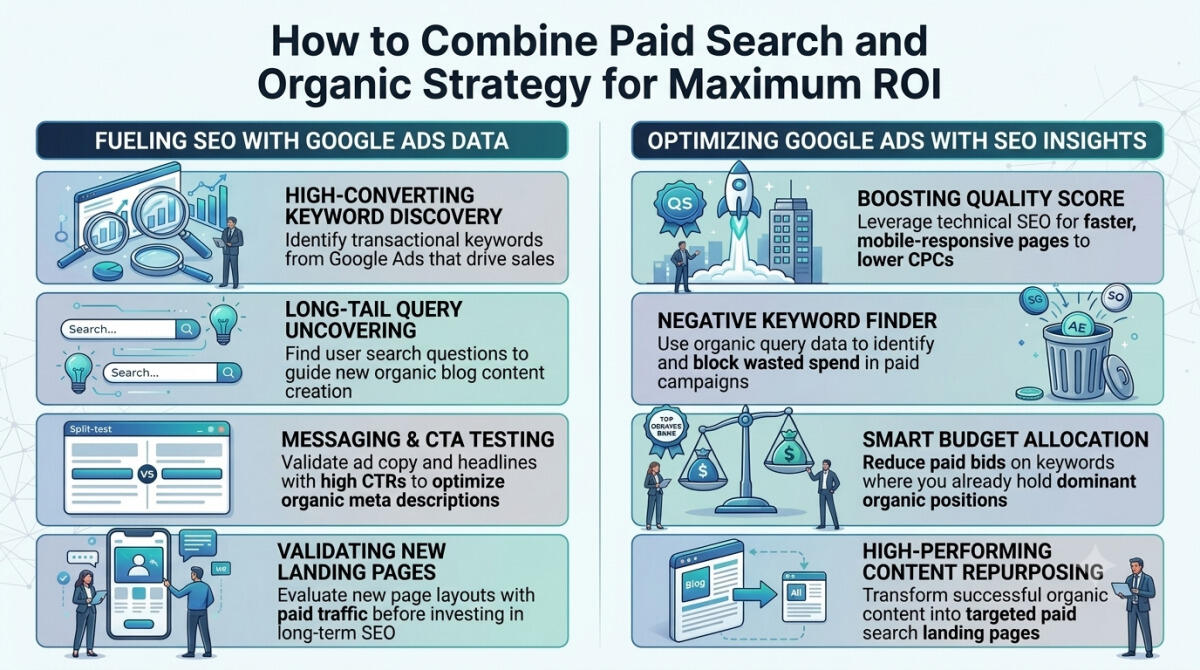
Using Google Ads Data to Fuel Your SEO Strategy
One of the greatest benefits of running paid search campaigns alongside SEO is the ability to leverage Google Ads intelligence to eliminate guesswork from organic content planning.
SEO campaigns typically take months to demonstrate top rankings for competitive keywords. Investing resources into optimizing for terms that do not convert can result in wasted time and effort. Google Ads acts as a testing ground to validate keywords before committing to long-term organic campaigns.
Paid data strengthens organic SEO with:
- Identify high-converting transactional keywords
- Discover long-tail search queries
- Test headline variations and meta descriptions
- Evaluate landing page layouts
- Uncover search terms with high commercial intent
Using SEO Insights to Optimize Google Ads Performance
The integration between paid and organic channels is a two-way street. Valuable insights gathered from organic search performance can significantly improve paid search efficiency and reduce advertising costs.
Search engine optimization emphasizes relevance, content depth, and site structure—all of which play a crucial role in Google Ads Quality Score calculation. High Quality Scores directly reduce cost-per-click (CPC) rates and improve ad position.
SEO principles improve paid search campaigns with:
- Higher quality scores
- Negative keyword discovery
- Organic coverage strategy
- Long-form content conversion
- Improved user experience
Strategic Ways to Combine Paid and Organic Search
To maximize marketing budget efficiency, businesses should adopt a strategic approach to combining SEO and PPC across different scenarios and customer funnel stages.
This starts with the keyword hand-off, where paid ads capture immediate visibility for competitive terms while long-term organic rankings build, allowing ad spend to be reallocated once page-one organic positions are reached. For high-intent commercial terms, adopting a full search page domination strategy by maintaining listings in both paid ad slots and organic search results maximizes total overall click volume.
Additionally, defending branded terms through a mix of organic brand optimization and paid ads prevents competitors from bidding on your business name and stealing ready-to-buy traffic. Finally, using Google Ads to support seasonal promotions captures short-term, time-sensitive search demand without disrupting your year-round organic SEO foundation.
Balancing Marketing Spend Between SEO and PPC
Allocating resources effectively between SEO and Google Ads depends on business maturity, industry competition, budget constraints, and growth goals.
- Allocate a higher budget to Google Ads
- Established websites with strong domain authority
- Maintain a balanced allocation
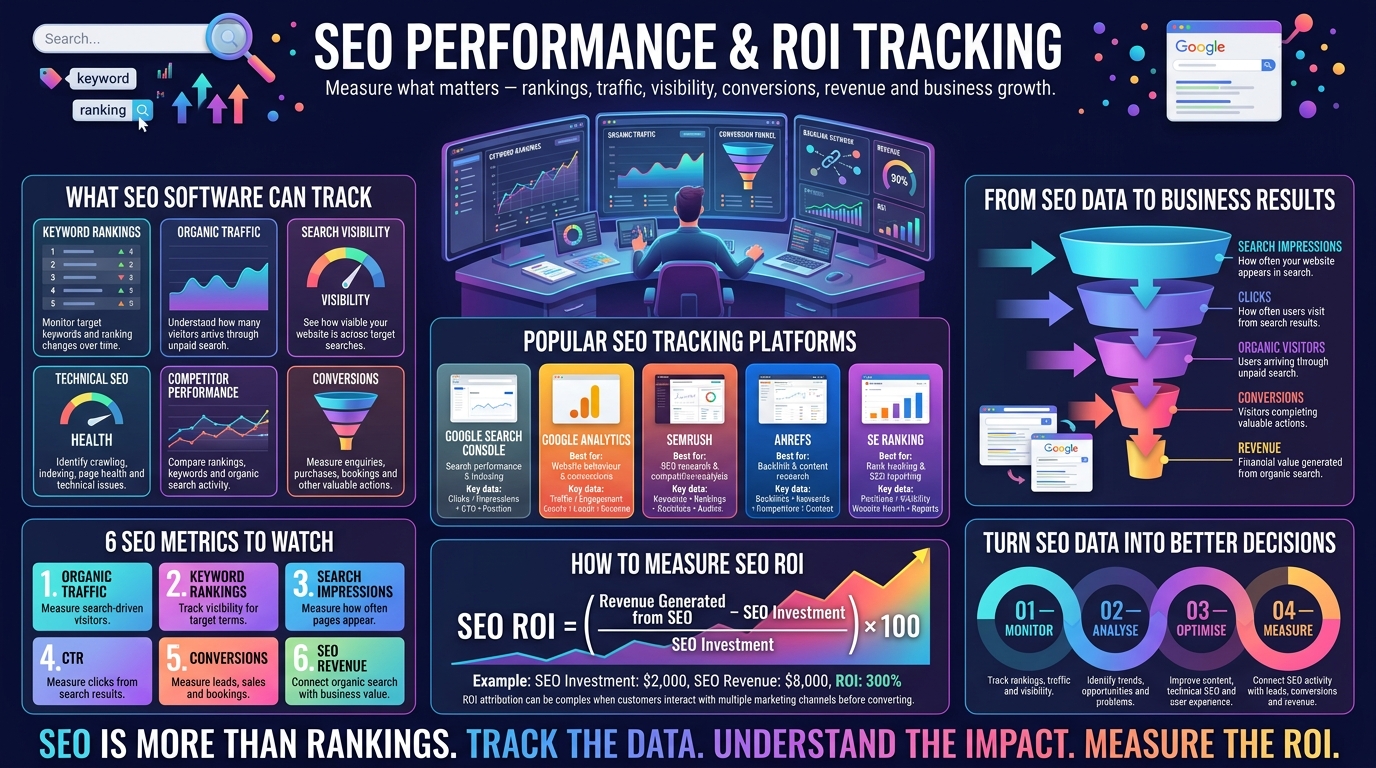
Measuring Integrated Search ROI
Evaluating the success of a combined SEO and Google Ads strategy requires tracking overarching metrics rather than assessing channels in silos. Viewing performance through an integrated lens reveals the true impact on overall customer acquisition.
Metrics to monitor for combined search success:
- Blended Cost Per Acquisition (CPA)
- Overall search engine market share
- Cross-channel assisted conversions
- Paid-to-Organic traffic ratio
- Total conversion volume growth
Long-Term Advantages of a Unified Search Strategy
Treating SEO and Google Ads as complementary components of a unified digital marketing strategy offers lasting competitive advantages.
- Maximizes search visibility
- Reduces overall marketing acquisition costs
- Protects the business against algorithm changes
- Enhances ad relevance
- Improve landing page conversion rates
- Provides continuous market testing
- Offer real-time performance adjustments
Conclusion
Both SEO and Google Ads offer distinct benefits that are valuable to modern digital marketing strategies. While Google Ads provides fast visibility, precise targeting, and immediate traffic, SEO builds sustainable organic authority, long-term brand equity, and lower customer acquisition costs over time.
Choosing between SEO and Google Ads is not necessary when a business can combine both channels into a single, cohesive strategy. By sharing keyword data, aligning content efforts, optimizing landing pages for Quality Score, and balancing budgets based on intent, companies can extract far higher value than running either channel independently.
Businesses that integrate paid search and organic SEO position themselves to dominate search engine results pages, capture qualified leads at every stage of the funnel, and achieve maximum ROI from their overall search marketing investment.
FAQs
1. Is SEO or Google Ads better for a small business?
Neither channel is inherently better; the right choice depends on immediate goals and budget. Google Ads is ideal for generating quick leads and immediate traffic, while SEO is better for building sustainable, long-term organic visibility at a lower recurring cost. Combining both usually yields the best outcome.
2. Does running Google Ads help improve organic SEO rankings directly?
Google Ads does not directly impact organic SEO rankings, as Google maintains a clear separation between paid advertising and organic search algorithms. However, paid search indirectly supports SEO by providing valuable keyword conversion data, driving brand awareness, and increasing overall traffic to optimized landing pages.
3. Should a business bid on its own brand name in Google Ads if it already ranks #1 organically?
Bidding on your brand name is recommended if competitors are running ads on your brand terms. Running branded Google Ads ensures you control the top of the search results page, prevents competitors from stealing traffic, and allows you to test specific promotional messaging.
4. How long does it take for SEO to replace Google Ads traffic?
Organic SEO typically takes anywhere from three to twelve months to generate consistent, top-page rankings depending on domain authority and market competition. Businesses often scale back Google Ads spend on specific keywords gradually as organic rankings reach top positions.
5. How does landing page SEO affect Google Ads costs?
Optimizing a landing page for SEO improves its relevance, content quality, and user experience metrics like load speed. These improvements increase your Google Ads Quality Score, which directly lowers your cost-per-click (CPC) and helps achieve better ad positioning for lower spend.