Search engine optimization (SEO) involves much more than using the right keywords and creating quality content. Search engines like Google also need to understand what your website is about before they can display it to the right audience. One of the most effective ways to help search engines interpret your content is through structured data.
Structured data is a form of code added to a website that provides additional information about the content on each page. Instead of asking search engines to guess what a page contains, structured data clearly explains whether the page is about a business, product, service, article, event, review, or another type of content.
Visitors cannot usually see structured data. However, it plays an important role in technical SEO. When implemented correctly, it helps search engines understand website content more accurately, improves search visibility, and increases the chances of appearing in enhanced search results.
For businesses that want to strengthen their online presence, structured data has become an important part of a comprehensive SEO strategy.
What Is Structured Data?
Structured data is a standardized format used to organize website information. It helps search engines understand your content more easily.
It works by adding special code, commonly known as schema markup, to a webpage.
This code provides additional details about the page, including information such as:
- Business name
- Products
- Services
- Articles
- Reviews
- FAQs
- Contact information
- Events
- Organization details
Rather than relying only on visible text, search engines use structured data to better understand the meaning and purpose of each webpage.
This allows them to deliver more accurate search results to users.
Why Search Engines Need Structured Data
Search engines continuously crawl billions of webpages.
Although modern search algorithms are highly advanced, websites can still contain information that is difficult to interpret correctly.
For example, a webpage may include:
- Business contact details
- Product information
- Customer reviews
- Event dates
- Frequently asked questions
Without structured data, search engines may not fully understand how these pieces of information relate to one another.
Structured data provides clear context, making it easier for search engines to identify important information and display it appropriately in search results.
How Structured Data Supports SEO
Many people assume structured data directly improves rankings.
In reality, structured data is not a direct ranking factor.
Instead, it strengthens several important SEO elements that contribute to better overall search performance.
These include:
- Improved search visibility
- Better content understanding
- Rich search results
- Higher click-through rates
- Enhanced user experience
When combined with quality content and strong technical SEO, structured data helps websites perform more effectively in search engines.
Improved Search Engine Understanding
One of the biggest advantages of structured data is that it helps search engines understand website content more accurately.
Instead of relying only on page text, search engines receive additional information describing:
- The purpose of the page
- Content categories
- Business details
- Products and services
- Articles
- Customer reviews
This clearer understanding helps search engines connect your website with relevant user searches.
Increased Search Visibility
Structured data can improve how your website appears within search results.
Instead of displaying only a standard page title and description, eligible pages may qualify for enhanced search listings known as rich results.
These enhanced listings often attract more attention because they provide additional information directly within the search results.
Greater visibility can encourage more users to visit your website.
Rich Results Improve User Engagement
Rich results provide additional information that helps users make decisions before clicking a website.
Depending on the type of structured data used, search results may display:
- Star ratings
- FAQs
- Product details
- Business information
- Breadcrumb navigation
- Article details
- Event information
These enhanced search listings often appear more informative than standard results.
As a result, users may be more likely to choose your website over competitors with ordinary search listings.
Better Click-Through Rates
Although structured data does not guarantee higher rankings, it can improve click-through rates.
When your search listing provides additional information, users gain greater confidence before clicking.
A well-presented search result often attracts more attention by displaying useful details that answer common questions immediately.
Higher click-through rates can contribute to stronger overall SEO performance over time.
Common Types of Structured Data
Different types of websites use different schema markup depending on their content.
Some of the most common structured data types include:
Organization Schema
Provides information about a business, including its name, logo, website, and contact details.
Local Business Schema
Helps search engines understand local business information such as address, operating hours, and contact details.
This is particularly useful for businesses targeting local customers.
Article Schema
Identifies blog posts, news articles, and educational content.
It helps search engines recognize published content and display article-related information correctly.
FAQ Schema
Allows frequently asked questions and answers to become eligible for enhanced search displays when supported by search engines.
This improves the visibility of helpful information directly within search results.
Service Schema
Describes the professional services offered by a business.
It provides additional context about the solutions available to potential customers and helps search engines classify service pages more accurately.
How Structured Data Supports Technical SEO
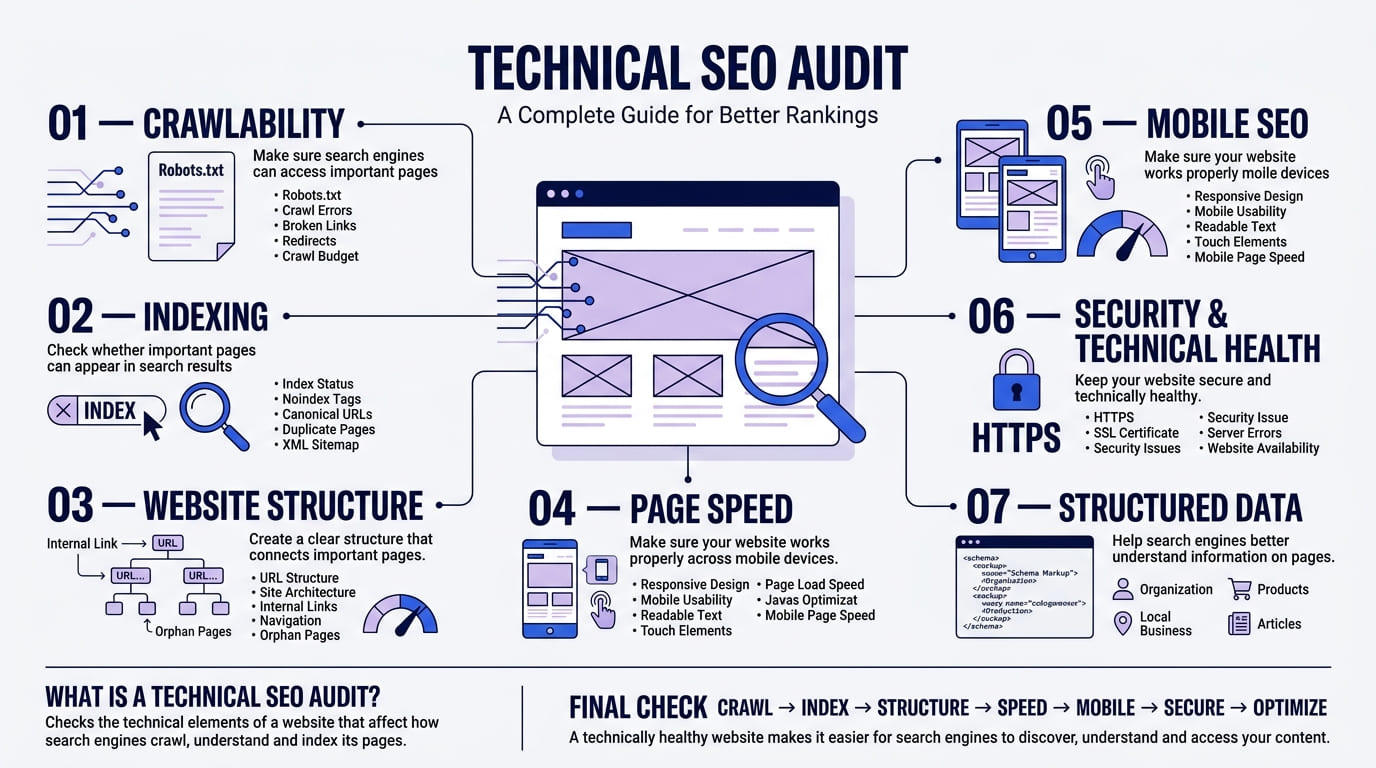
Technical SEO focuses on helping search engines crawl, understand, and index websites efficiently. Structured data plays an important role because it provides additional context that improves how search engines interpret website content.
When combined with a strong technical SEO strategy, structured data can help improve:
- Website crawlability
- Content understanding
- Search result appearance
- User experience
- Website organization
Although it should not replace quality content or good website structure, structured data strengthens the technical foundation of a well-optimized website.
Common Structured Data Mistakes
Simply adding schema markup is not enough. Incorrect implementation can prevent search engines from understanding your website properly.
Some common mistakes include:
- Using the wrong schema type
- Adding incomplete information
- Providing inaccurate business details
- Using outdated schema markup
- Adding structured data that does not match visible page content
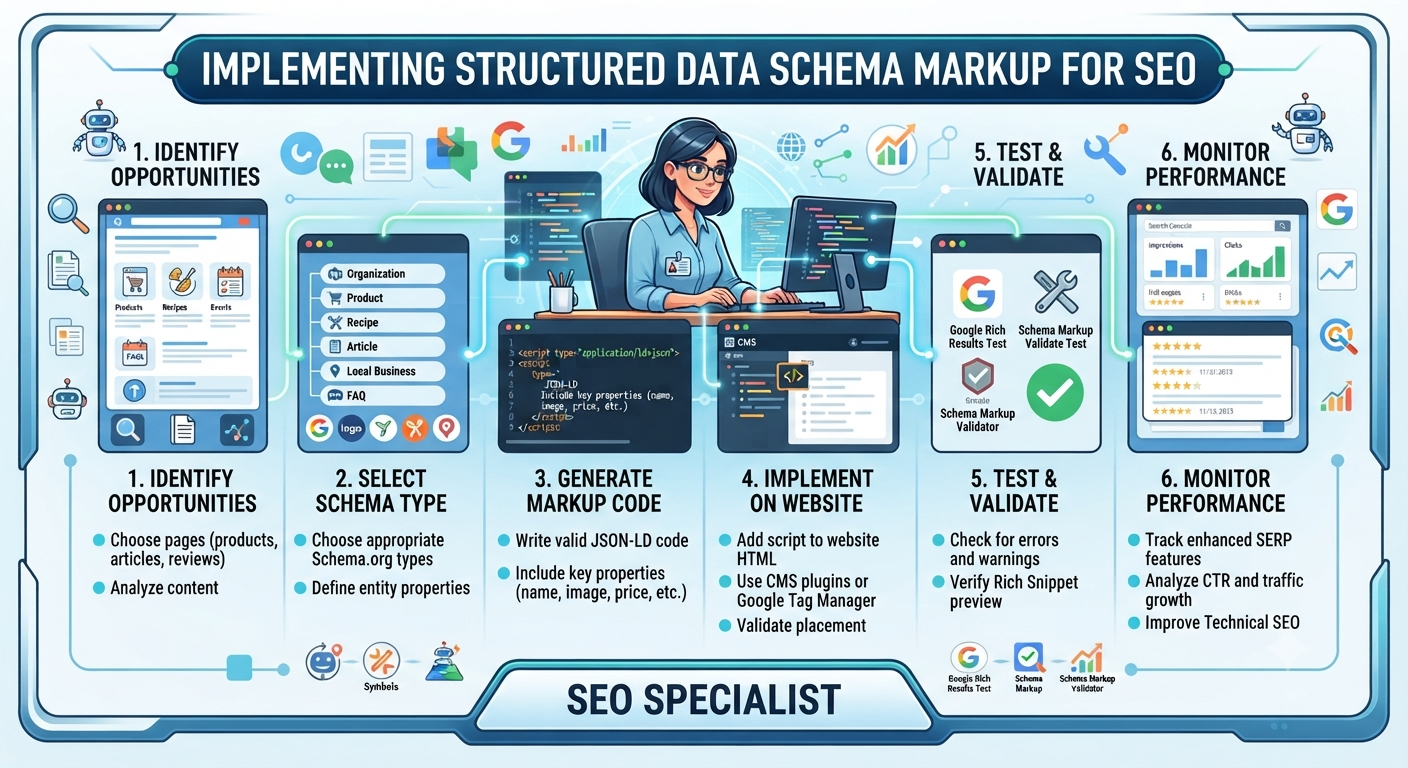
- Failing to test structured data after implementation
Following structured data guidelines and validating the markup helps ensure search engines can process the information correctly.
Why Professional SEO Services Matter
Structured data may appear simple, but implementing it correctly requires technical knowledge and careful planning.
SEO professionals understand how to select the appropriate schema types, ensure the markup matches website content, and integrate structured data into an overall SEO strategy.
Professional SEO services can help businesses:
- Identify suitable structured data opportunities
- Implement schema markup correctly
- Improve technical SEO performance
- Monitor website indexing
- Resolve technical SEO issues
- Maintain structured data as the website grows
Working with experienced SEO specialists helps businesses maximise the benefits of structured data while avoiding implementation errors.
Long-Term Benefits of Structured Data
Adding structured data is an investment in your website’s long-term SEO performance.
Some of the key benefits include:
✔ Improved search visibility
✔ Better search engine understanding
✔ More informative search listings
✔ Higher click-through rates
✔ Stronger technical SEO
✔ Improved user experience
✔ Better website organization
✔ Greater opportunities for rich search results
While structured data alone will not guarantee top rankings, it strengthens many of the technical elements that contribute to long-term SEO success.
How Structured Data Works With Other SEO Strategies
Structured data delivers the best results when combined with other SEO best practices.
Businesses should also focus on:
- Creating high-quality content
- Performing keyword research
- Improving website speed
- Optimising mobile responsiveness
- Building a clear website structure
- Strengthening internal linking
- Maintaining technical SEO
By combining these strategies, businesses create a website that is easier for both users and search engines to understand.
Conclusion
Structured data has become an important component of modern SEO because it helps search engines better understand website content and present it more effectively in search results. Although it is not a direct ranking factor, it supports technical SEO by providing clear information about your business, services, articles, products, and other website content.
When implemented correctly, structured data can improve search visibility, increase click-through rates, and enhance the overall user experience through richer search results. It also helps search engines interpret website information more accurately, making it easier for potential customers to find relevant content.
Businesses looking to improve their online presence should consider structured data as part of a comprehensive SEO strategy. Combined with quality content, technical optimisation, and ongoing SEO improvements, structured data can contribute to stronger long-term search performance.
FAQs
1. What is structured data in SEO?
Structured data is a standardized format of code, often called schema markup, that helps search engines better understand the content on your website. It provides additional information about your business, services, articles, products, FAQs, and other webpage elements, making it easier for search engines to display relevant information in search results.
2. Does structured data improve Google rankings?
Structured data is not a direct Google ranking factor. However, it helps search engines understand website content more accurately, which can improve search visibility, support rich results, and increase click-through rates. When combined with quality content and technical SEO, it contributes to stronger overall SEO performance.
3. What types of websites should use structured data?
Almost every website can benefit from structured data. Business websites, e-commerce stores, blogs, service providers, educational websites, and local businesses can all use schema markup to provide additional information to search engines and improve how their pages appear in search results.
4. How do I know if my website has structured data?
You can check whether your website uses structured data by using Google’s Rich Results Test or Schema Markup Validator. These tools identify supported schema types and highlight any implementation issues that may need to be corrected.
5. Why should businesses use professional SEO services for structured data?
Implementing structured data correctly requires technical expertise and ongoing maintenance. Professional SEO specialists ensure the correct schema types are applied, validate the markup, monitor technical SEO performance, and keep structured data aligned with current search engine best practices. This helps businesses avoid errors while maximising the SEO benefits.