A successful SEO strategy involves more than creating high-quality content and targeting relevant keywords. The way your website is organised and connected also plays an important role in helping both users and search engines navigate your content. One of the most effective yet often overlooked optimisation techniques is internal linking.
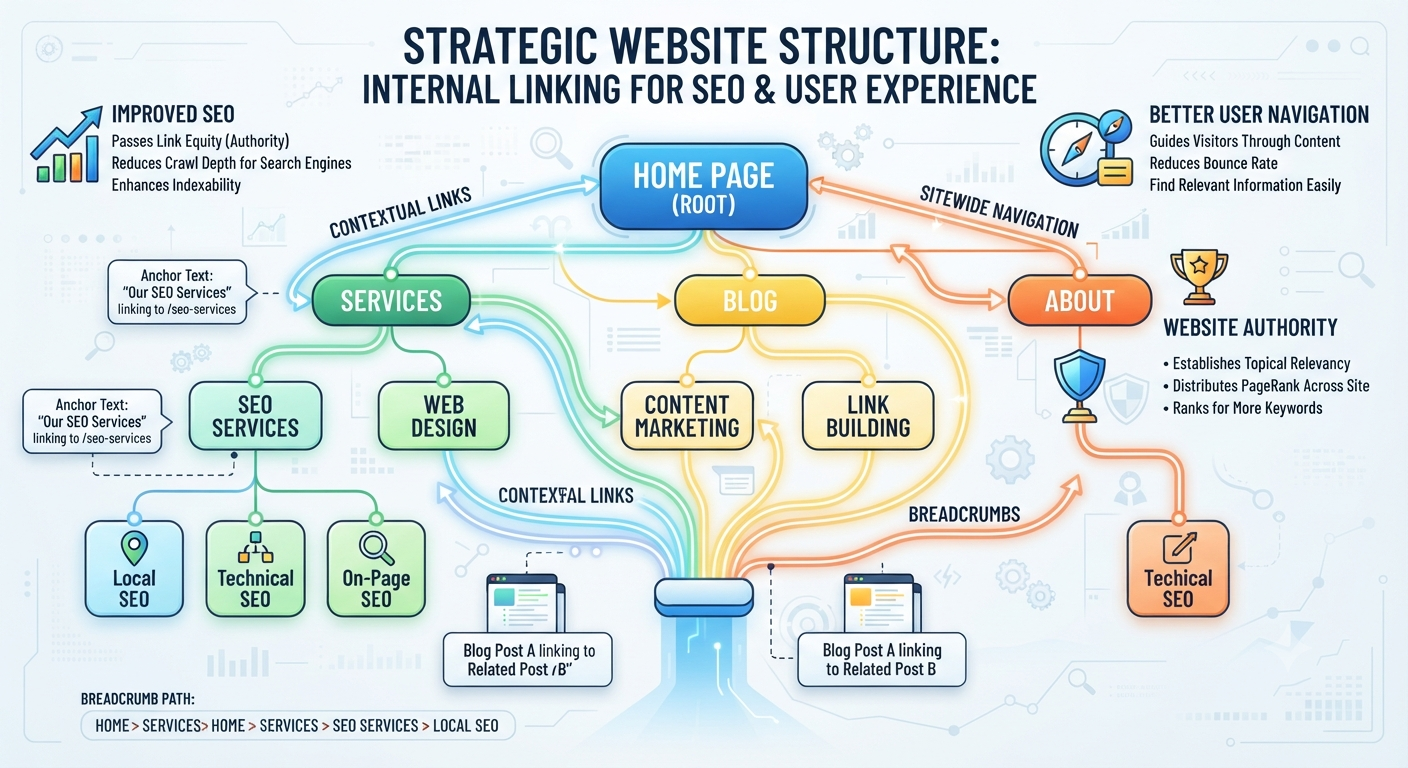
Internal links connect one page of your website to another, creating a logical structure that helps visitors find relevant information while making it easier for search engines to discover and understand your content. When used strategically, internal linking improves user experience, supports website authority, and contributes to stronger long-term SEO performance.
Rather than treating each webpage as an individual piece of content, internal linking creates meaningful relationships between pages, allowing your website to function as a connected and authoritative resource.
What Is Internal Linking?
Internal linking refers to hyperlinks that connect one page on your website to another page within the same domain.
Unlike external links that direct visitors to other websites, internal links keep users within your own website.
Examples include links to:
- Service pages
- Blog articles
- Category pages
- Contact pages
- Related resources
- Frequently asked questions
A well-planned internal linking strategy helps visitors continue exploring your website while improving its overall structure.
Why Internal Linking Matters for SEO
Search engines use links to discover and understand webpages.
Internal links help search engine crawlers move through your website more efficiently, making it easier to identify important pages and understand how different topics relate to one another.
Effective internal linking helps:
- Improve website organisation
- Support search engine crawling
- Strengthen topical relevance
- Increase page discoverability
- Improve overall SEO performance
A clear website structure allows search engines to better interpret your content and index pages more effectively.
Helps Search Engines Discover More Pages
Search engine crawlers follow internal links to locate new and existing content.
If important pages have few or no internal links pointing to them, they may be more difficult for search engines to discover.
Strategic internal linking helps:
- Improve page indexing
- Increase crawl efficiency
- Connect related content
- Reduce isolated webpages
- Improve website coverage
Making important pages easier to find supports better long-term search visibility.
Strengthens Website Authority
Internal linking helps distribute authority throughout a website.
When authoritative pages link to other relevant pages, they help reinforce the importance of those pages within the website’s overall structure.
For example, a popular service page can link to supporting blog articles, while blog articles can direct visitors back to important service pages.
This interconnected structure strengthens website authority while helping visitors access more valuable information.
Improves User Experience
Visitors often want additional information after reading a webpage.
Internal links provide logical pathways that encourage users to continue exploring relevant content instead of leaving the website.
Benefits include:
- Easier navigation
- Longer visit durations
- Better content discovery
- Improved engagement
- Simpler customer journeys
A positive user experience benefits both visitors and overall website performance.
Supports Topical Relevance
Grouping related pages through internal links helps establish clear topic relationships.
For example, a website offering SEO services can connect articles about:
- Keyword research
- Technical SEO
- On-page SEO
- Link building
- Website audits
This organised structure helps search engines understand your expertise within a particular subject area while making it easier for users to access related information.
Encourages Visitors to Explore More Content
Internal links naturally guide visitors towards additional resources that answer their questions or provide further insights.
Examples include linking from:
- Blog articles to service pages
- Service pages to case studies
- Tutorials to related guides
- Resource pages to contact pages
Keeping visitors engaged with relevant content creates more opportunities for enquiries and conversions.
Best Practices for Internal Linking
Creating internal links should be part of every long-term SEO strategy. However, links should always provide value and guide users to relevant information.
Some recommended best practices include:
- Link related pages naturally
- Use descriptive anchor text
- Keep your website structure organised
- Update older articles with links to newer content
- Ensure important pages receive sufficient internal links
- Regularly review and improve your internal linking strategy
A well-planned approach helps both visitors and search engines navigate your website more effectively.
Common Internal Linking Mistakes
Although internal linking is beneficial, poor implementation can reduce its effectiveness.
Some common mistakes include:
- Using too few internal links
- Linking to unrelated pages
- Using generic anchor text such as “Click Here”
- Creating broken internal links
- Ignoring older website content
- Overloading pages with excessive links
Avoiding these mistakes helps maintain a clean website structure while improving usability and SEO performance.
Internal Linking Supports Long-Term SEO Growth
SEO is an ongoing process rather than a one-time task.
As websites continue to grow, internal linking becomes even more valuable because it connects new content with existing pages.
Regularly updating internal links helps:
- Strengthen website authority
- Improve content organisation
- Increase page visibility
- Support future SEO efforts
- Enhance overall website quality
A connected website structure provides long-term value for both search engines and users.
Why Professional SEO Planning Matters
Developing an effective internal linking strategy requires careful planning.
SEO professionals evaluate website structure, content relationships, and user behaviour to create logical pathways that improve both usability and search performance.
Professional SEO services may include:
- Website structure analysis
- Internal linking strategy
- Content optimisation
- On-page SEO improvements
- Technical SEO support
- Ongoing performance monitoring
Working with experienced SEO specialists helps businesses maximise the value of every webpage while supporting sustainable search engine growth.
Conclusion
Internal linking is one of the most effective on-page SEO techniques for improving website authority, search visibility, and user experience. By connecting related pages, businesses help search engines understand their website structure while making it easier for visitors to discover valuable information.
A well-planned internal linking strategy supports better crawlability, stronger topical relevance, improved engagement, and long-term SEO success. As your website continues to grow, maintaining meaningful internal links becomes an essential part of building a stronger online presence.
FAQs
1. What is internal linking in SEO?
Internal linking is the process of connecting one page of a website to another page within the same website. It helps users navigate related content while allowing search engines to better understand the structure and relationships between webpages.
2. Why are internal links important for SEO?
Internal links improve crawlability, support page indexing, strengthen website authority, and help search engines understand how different pages relate to one another. They also improve user experience by making relevant content easier to find.
3. How many internal links should a webpage have?
There is no fixed number. The ideal amount depends on the content and page length. Internal links should always be relevant and useful rather than added excessively.
4. Can internal linking improve website authority?
Yes. Internal linking helps distribute authority across related pages and reinforces topical relevance, allowing important pages to receive more visibility within the website structure.
5. Should I update internal links on older content?
Yes. Regularly adding links from older articles to newer content keeps your website well connected, improves content discovery, and supports long-term SEO performance.