Many businesses want more people to find their websites through Google. However, creating individual pages for every product, service, or location takes time. It can also require a lot of resources.
This is where Programmatic SEO can help. It uses structured data, page templates, and automation to create multiple website pages. Instead of building each page from scratch, businesses can use one system to create many relevant pages.
For example, an online store may sell hundreds of products. A travel website may also cover many destinations. Both can use programmatic SEO to organise their content and reach more people through search engines.
However, publishing more pages does not guarantee better rankings. Each page must offer useful information and match what users are searching for. Therefore, businesses need a clear plan before using this strategy.
What Is Programmatic SEO?
Programmatic SEO is a method of creating many website pages with the help of data and reusable templates.
Instead of writing every page by hand, businesses prepare a template. They then use organised data to fill in the details on each page.
For example, a travel website can create pages for different holiday destinations. Meanwhile, an online store can build pages for product types, brands, and features.
Common examples of programmatic SEO pages include:
- Location-based pages: Create pages for different cities, towns, or service areas.
- Product pages: Show products based on their brands, types, or features.
- Comparison pages: Help users compare different products or services.
- Directory pages: Group business listings by location, industry, or category.
- Industry pages: Provide information for different business sectors and customer groups.
As a result, businesses can organise large amounts of content more easily. They can also target more specific search queries.
How Does Programmatic SEO Work?
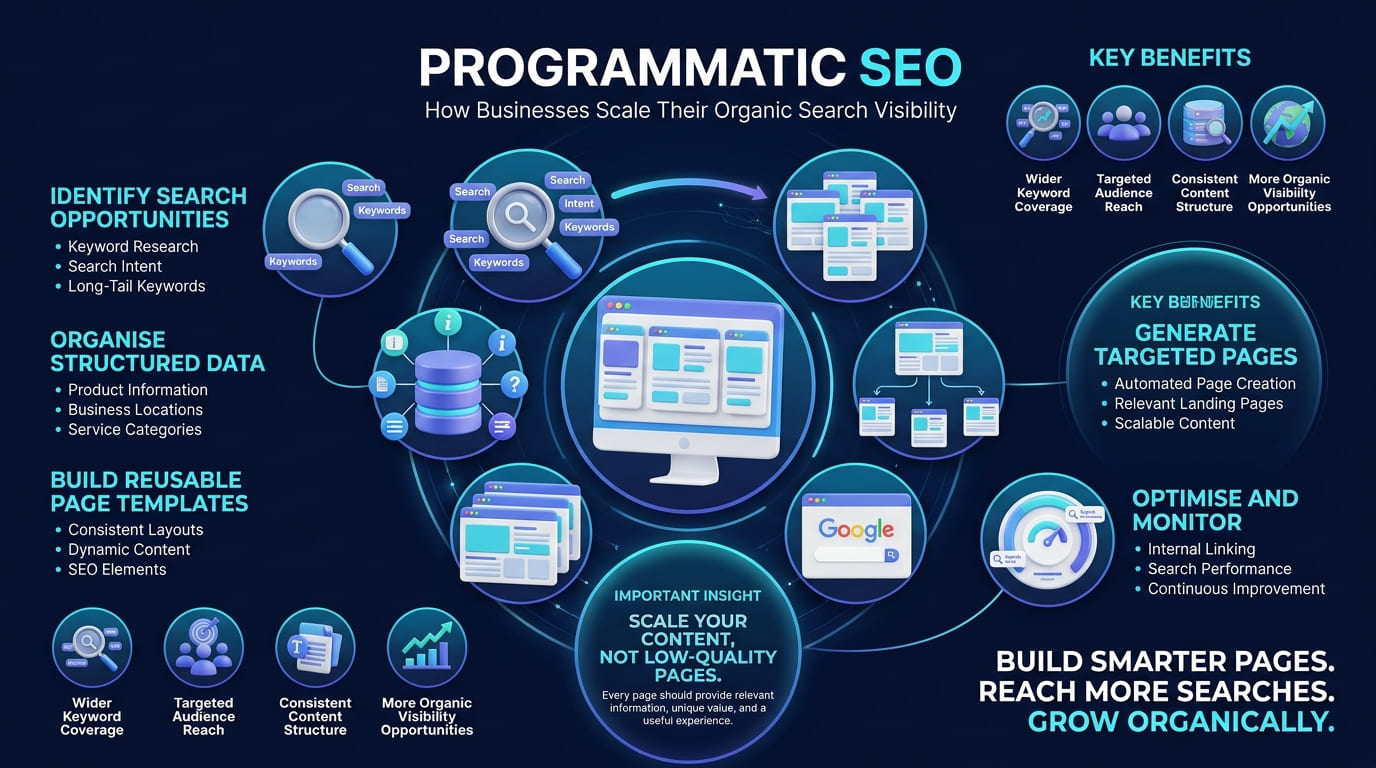
Programmatic SEO uses several elements to create targeted website pages. These include keyword research, data, templates, and automation.
First, businesses need to find search terms that share a similar pattern. Next, they collect the information needed for each page.
The main steps include:
- Keyword research: Find relevant search terms and understand what users want.
- Data collection: Gather details about products, services, and locations.
- Page templates: Build a layout that can be reused for different pages.
- Content generation: Use the data to create individual website pages.
- SEO optimisation: Add suitable titles, descriptions, headings, and internal links.
- Quality checks: Review each page to make sure the information is correct and useful.
For example, a digital marketing agency may offer website design services in several cities. It can create a page for each service area.
Each page can include local details, service information, and contact options. This makes it easier for visitors to find information that matches their needs.
Why Is Programmatic SEO Important for Business Growth?
As a business grows, its website may need more pages. These pages may cover new products, services, locations, or customer groups.
Creating every page manually can take a lot of time. In addition, managing hundreds of pages can become difficult.
Programmatic SEO offers a more organised way to handle this growth.
Here are some key benefits:
- Wider keyword coverage: Target more relevant search terms, including long-tail keywords.
- Better audience targeting: Create pages for different products, locations, and customer needs.
- Consistent content structure: Use the same layout across related pages.
- Easier website expansion: Add new pages when the business introduces more products or services.
- Better content management: Organise website information through structured data.
- More search opportunities: Give search engines more useful pages to discover.
For example, an online electronics store may sell hundreds of products. It can use product data to create pages for different brands and categories.
As a result, customers can find more specific information through search engines. The business can also manage its website content more efficiently.
What Types of Businesses Can Use Programmatic SEO?
Programmatic SEO works well for businesses with large amounts of organised information. It is also useful for websites that serve different locations or customer groups.
Small businesses can use this method too. However, they should have enough useful information to support each page.
Here are some examples:
- Ecommerce businesses: Create pages for product brands, categories, and features.
- Travel companies: Build pages for destinations, hotels, and holiday packages.
- Real estate businesses: Create pages for property types and locations.
- Professional service providers: Target different industries and service areas.
- Business directories: Organise listings by location and business category.
- Job portals: Create pages for job types, industries, and work locations.
For example, a professional service company may work with healthcare, education, and retail businesses.
It can create separate pages for each industry. Each page should explain the needs of that industry and how the company can help.
This approach gives visitors more useful information. It also helps businesses reach people with different needs.
How to Build an Effective Programmatic SEO Strategy
A good programmatic SEO strategy starts with proper planning. Businesses should not rush to create hundreds of pages.
Instead, they should follow a clear process. This helps maintain content quality as the website grows.
Identify Scalable Keyword Opportunities
Start by finding groups of related search terms. Look for keywords that share a similar search pattern.
For example, a property website may target searches such as:
- Apartments for rent in Kuala Lumpur
- Condominiums for rent in Selangor
- Houses for rent in Johor Bahru
- Serviced apartments in Penang
These searches follow a similar structure. However, each one targets a different location.
Before creating pages, check whether users need separate information for each search. Also, make sure the business has enough useful data to support those pages.
Organise Accurate and Relevant Data
Good data is the foundation of programmatic SEO. It helps ensure that every page shows the correct information.
Businesses should prepare their data before generating pages.
Depending on the website, this may include:
- Product names and specifications
- Service details and features
- Business locations and contact details
- Industry information
- Product categories and prices
- Relevant images and resources
In addition, businesses should review their data regularly. Outdated or incorrect details can confuse visitors and reduce trust.
Create Reusable Page Templates
Next, businesses need a template for their landing pages. This template provides a consistent structure for related content.
A typical page may include:
- A clear page title and main heading
- A short introduction
- Relevant products or services
- Useful supporting information
- Frequently asked questions
- Related internal links
- A clear call to action
The layout can remain similar across pages. However, the actual content should match the topic of each page.
Avoid changing only the location or keyword in an existing paragraph. Instead, provide details that make each page useful on its own.
Generate Targeted Landing Pages
Once the data and templates are ready, businesses can start generating pages. They can use a content management system, database, or suitable automation tools.
However, automation should not replace human review.
Before publishing, check that:
- All information is correct and up to date.
- The content answers a clear user need.
- Each page offers useful details.
- Titles and headings match the page topic.
- Visitors can understand the products or services.
Remember, a smaller number of useful pages can offer more value than hundreds of repetitive pages.
Build a Strong Internal Linking Structure
Internal links connect different pages on a website. They also help visitors find related information.
For websites with many generated pages, good internal linking is especially important.
Businesses should:
- Link location pages to relevant service pages.
- Connect product pages to their main categories.
- Group related listings under category pages.
- Add links to useful blog articles.
- Make important pages easy to reach through website navigation.
Furthermore, links should be relevant to the content. Avoid adding too many links that do not help visitors.
You can also learn more about how internal linking improves SEO and website authority.
Monitor and Improve Page Performance
Publishing pages is only one part of the process. Businesses must also check how those pages perform.
Google Search Console can help website owners track search impressions, clicks, and queries. Meanwhile, Google Analytics can provide more details about website visitors.
Review these areas regularly:
- Search impressions and clicks
- Target keyword performance
- Page indexing status
- Organic traffic
- User engagement
- Enquiries and conversions
If a page is not performing well, look for areas that need improvement. For example, the content may not match search intent. The page may also need better internal links or more useful information.
Regular checks help businesses improve their strategy over time.
Common Programmatic SEO Mistakes Businesses Should Avoid
Programmatic SEO can help businesses create pages at scale. However, poor planning can lead to weak content and a poor user experience.
Here are some common mistakes to avoid:
- Publishing thin content: Pages contain very little useful information.
- Creating duplicate content: Multiple pages show almost the same information.
- Using poor data: Product, service, or location details are incorrect.
- Targeting irrelevant keywords: Pages do not match what users are looking for.
- Ignoring user experience: Pages are hard to read or navigate.
- Overlooking indexing issues: Important pages cannot be found or indexed by search engines.
- Relying only on automation: Businesses publish content without checking its quality.
Google also warns against scaled content abuse. This refers to creating large amounts of content mainly to manipulate search rankings instead of helping users.
The issue is not simply the use of automation. The main concern is whether the content offers real value.
Therefore, businesses should focus on useful information and clear page purposes. Every page should help visitors find what they need.
How to Measure Programmatic SEO Performance
Tracking results helps businesses understand whether their strategy is working. It also shows which pages need more attention.
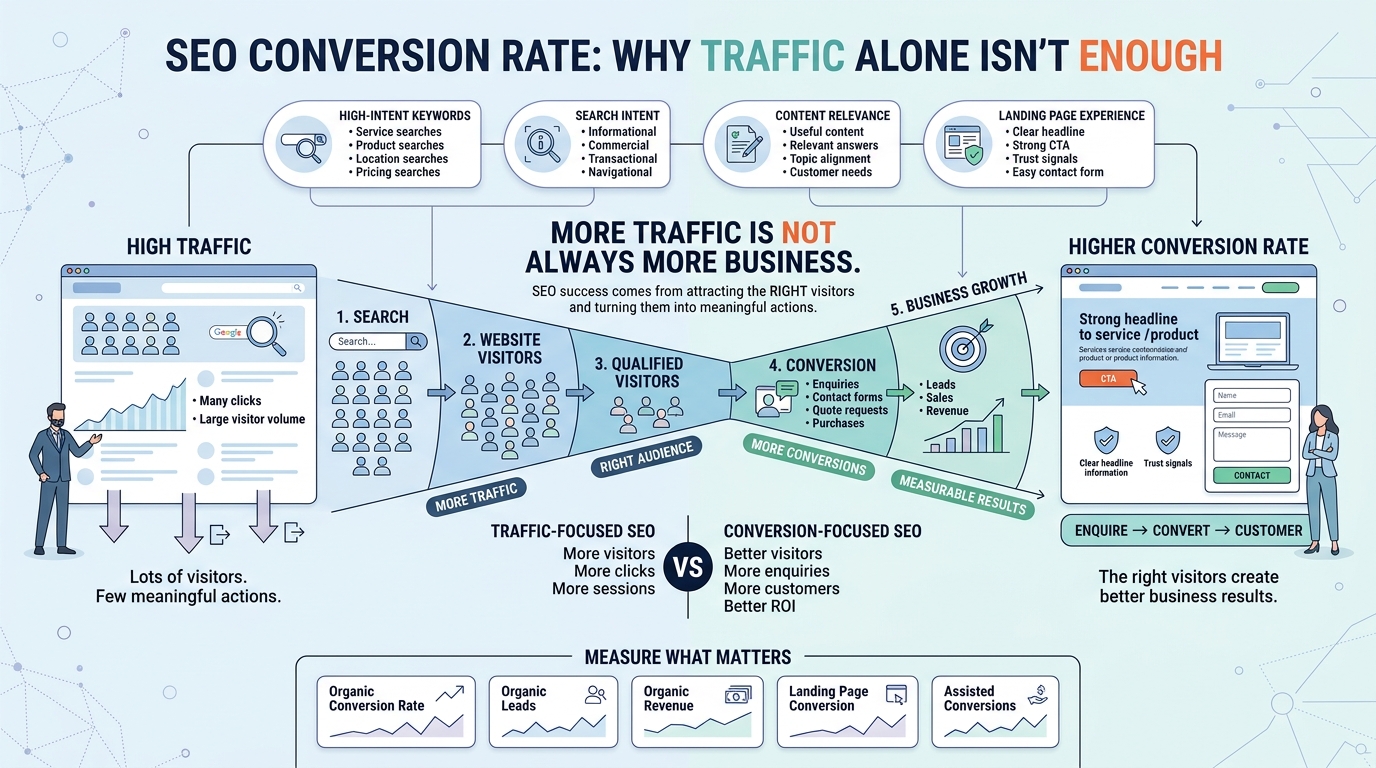
Instead of counting only the number of pages published, focus on the results that matter.
Important performance indicators include:
- Organic impressions: How often pages appear in search results.
- Organic clicks: How many people visit through organic search.
- Keyword rankings: How well pages perform for target search terms.
- Indexed pages: How many important pages are found and indexed by Google.
- Organic engagement: How visitors interact with the website.
- Conversion rates: How many visitors complete useful actions, such as enquiries or purchases.
Google Search Console helps track search performance. In addition, Google Analytics provides insights into visitor behaviour and conversions.
Businesses should also compare different groups of pages. For example, they can check whether location pages perform better than product category pages.
These insights help businesses decide where to focus their next improvements.
Long-Term Benefits of Programmatic SEO
Programmatic SEO can support business growth when used with proper planning and quality checks.
Over time, it may help businesses:
- Reach more relevant search queries.
- Organise large amounts of website content.
- Connect with specific customer groups.
- Maintain consistent page layouts.
- Improve opportunities for organic discovery.
- Manage content more efficiently.
- Match website information with customer needs.
- Expand their online presence.
However, these results are not guaranteed. Search performance depends on content quality, competition, website health, and user needs.
For this reason, businesses should review their pages regularly. They should also improve content when information changes.
Conclusion
Programmatic SEO helps businesses create targeted website pages using structured data and reusable templates. It can make content management easier and support wider keyword coverage.
By using accurate data and relevant page layouts, businesses can reach more specific audiences. They can also make it easier for users to find useful information through search engines.
However, creating more pages is not the main goal. Every page must answer a real question or meet a clear user need.
With proper planning, regular quality checks, and performance tracking, programmatic SEO can support a stronger long-term SEO strategy.
FAQs
1. What is programmatic SEO?
Programmatic SEO is a method of creating multiple website pages using structured data and reusable templates. It helps businesses manage large amounts of content and target different search queries.
2. How does programmatic SEO help businesses?
It helps businesses create pages for different products, services, and locations. As a result, they can reach more specific audiences and cover more relevant search terms.
3. Is programmatic SEO suitable for small businesses?
Yes. Small businesses can use programmatic SEO if they have enough useful information for different pages. For example, a company with several services or locations may benefit from this approach.
4. Can programmatic SEO create duplicate content?
Yes. Poor templates and limited data can lead to repetitive pages. To avoid this, businesses should provide useful information and make sure each page serves a clear purpose.
5. How can businesses measure programmatic SEO results?
Businesses can track impressions, clicks, keyword rankings, indexed pages, and conversions. Google Search Console and Google Analytics are useful tools for monitoring these results.