Google Search has traditionally helped businesses connect with potential customers by displaying relevant websites based on users’ search queries. However, the introduction of Google’s AI Mode is changing how people discover information, explore services, and make purchasing decisions online.
Instead of displaying only a list of search results, AI Mode provides AI-generated responses that help users explore complex questions, compare different options, and discover relevant information through conversational searches.
For businesses, this creates new opportunities to reach potential customers through AI-powered search experiences. At the same time, companies need to understand how changing search behaviour may affect website traffic, online visibility, and digital marketing strategies.
As AI continues to influence how people interact with search engines, adapting to these developments can help businesses maintain a competitive online presence.
What Is Google AI Mode and How Does It Work?
Google’s AI Mode is an AI-powered search experience that allows users to ask detailed questions and receive comprehensive responses directly within Google Search.
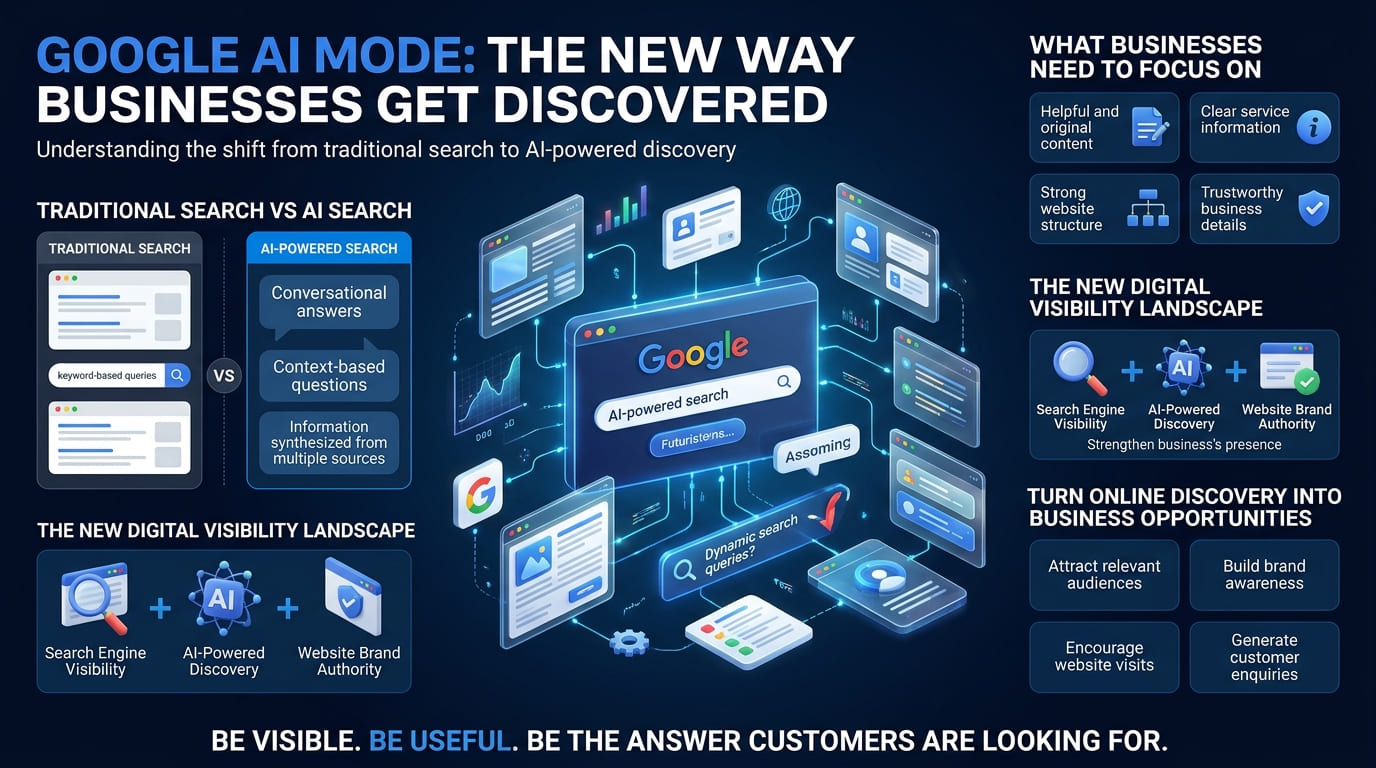
Unlike traditional search results, which primarily display a list of relevant website links, AI Mode generates conversational answers using information gathered from multiple sources across the web.
Users can also ask follow-up questions to explore a topic further, compare different options, or clarify specific details without starting a completely new search.
Some of the main capabilities of Google AI Mode include:
-
AI-generated answers: Provides detailed responses based on information from different sources.
-
Conversational searches: Allows users to ask follow-up questions and explore related topics.
-
Query fan-out: Breaks complex questions into related searches to gather information from multiple sources.
-
Supporting website links: Displays relevant website links that users can visit to explore information further.
-
Multimodal search: Supports different ways of interacting with search, including text, voice, and images.
These capabilities create a more interactive search experience where users can discover information and evaluate different businesses through a single conversation.
How Google AI Mode Changes Customer Search Behaviour
Google’s AI Mode changes how customers search for information and interact with businesses online. Instead of performing several separate searches, users can explore multiple aspects of a topic through one conversation.
For example, someone looking for a website design company may ask Google to recommend suitable providers, compare website development services, or explain what to consider before hiring a web design agency.
This creates several changes in customer search behaviour:
-
More detailed search queries: Users can ask specific questions about products, services, pricing, and business solutions instead of relying only on short keywords.
-
More informed purchasing decisions: AI-generated responses help users understand different options before deciding which business to contact.
-
Conversational research: Customers can refine their searches through follow-up questions to find information that better matches their requirements.
-
Different discovery opportunities: Businesses may be discovered through relevant links included in AI-generated responses.
-
Greater demand for useful information: Customers increasingly expect clear and relevant answers that address their specific needs.
Understanding these changes can help businesses create better content and develop marketing strategies that match how potential customers search for information.
How Google AI Mode Affects Business Online Visibility
Online visibility plays an important role in helping businesses attract potential customers. With AI Mode, website discovery can happen through both traditional search results and AI-generated responses.
Google’s AI search experiences can display links to supporting websites, giving businesses additional opportunities to reach people who are researching specific products, services, or solutions.
However, appearing in an AI-generated response is not guaranteed. Businesses still need to maintain a strong website presence and provide useful, relevant, and trustworthy information.
Businesses can strengthen their online visibility by focusing on:
-
High-quality website content: Publish informative articles and service pages that address genuine customer needs.
-
Clear business information: Ensure website content accurately explains the company’s services, experience, and offerings.
-
Relevant service pages: Create dedicated pages that describe individual products and services in sufficient detail.
-
Strong website structure: Organise website content logically so visitors and search engines can understand the information easily.
-
Consistent business information: Keep important company details accurate across relevant online platforms.
-
Useful supporting media: Include relevant images and videos to help visitors understand products and services.
A well-organised website with valuable information provides a stronger foundation for businesses seeking visibility across different search experiences.
How to Optimise SEO for Google AI Mode
Although AI Mode introduces a different way of searching, traditional SEO fundamentals remain important.
Google continues to recommend established SEO best practices for its AI-powered search experiences. Businesses do not need special AI-specific optimisation techniques to become eligible for AI Mode. Instead, they should focus on making their websites accessible and creating content that genuinely helps users.
Here are several ways businesses can adapt their SEO strategies:
-
Create people-first content: Develop useful articles, service pages, and resources that address real customer questions rather than producing content solely to target search engines.
-
Answer specific customer questions: Include clear explanations of common questions about products, services, pricing, and industry-related topics.
-
Demonstrate experience and expertise: Share practical examples, case studies, original insights, and relevant industry knowledge.
-
Maintain accurate information: Review existing website content regularly to ensure business details and service information remain relevant.
-
Improve technical SEO: Ensure important website pages are crawlable, indexable, and accessible to Google.
-
Strengthen internal linking: Connect related website pages to help visitors and search engines discover important information.
-
Use relevant images and videos: Support written content with useful visual information that improves the overall experience.
These practices help businesses establish a sustainable SEO foundation while adapting to changes in how people use Google Search.
How Website Content Supports Google AI Mode Visibility
Website content plays an important role in helping search engines understand what a business offers and which topics its website covers.
In AI-powered search experiences, users often ask detailed questions that require information from multiple sources. Businesses that publish relevant and informative content have more opportunities to provide useful information for these searches.
To improve content quality, businesses should consider:
-
Detailed service descriptions: Explain what each service includes, who it is suitable for, and how it addresses customer needs.
-
Informative blog articles: Publish articles that answer common industry questions and provide practical advice.
-
Original business insights: Share experiences, examples, and knowledge that make the content more valuable.
-
Clear content organisation: Use descriptive headings, paragraphs, and relevant sections to make information easier to understand.
-
Regular content updates: Review older articles and update information when business offerings or industry developments change.
Businesses should avoid publishing large amounts of repetitive or generic AI-generated content without adding meaningful value.
The goal is to create information that helps customers make better decisions while demonstrating the business’s knowledge and expertise.
Why Website Experience Matters for Google AI Mode
AI Mode may help users discover businesses through search, but the website experience remains important once visitors decide to explore a company further.
A potential customer who clicks through to a website should be able to understand the business, find relevant information, and take the next step without unnecessary difficulty.
Businesses should focus on the following website elements:
-
Mobile responsiveness: Ensure the website works properly across smartphones, tablets, and desktop devices.
-
Fast loading speed: Optimise images, scripts, and website elements to reduce unnecessary loading delays.
-
Clear navigation: Organise menus and service categories so visitors can find information easily.
-
Professional design: Use consistent branding, readable typography, and a layout that supports the business identity.
-
Clear calls to action: Provide visible options such as Contact Us, Request a Quote, or Book a Consultation.
-
Accessible information: Make important business details, service descriptions, and contact information easy to find.
A positive website experience can help turn visitors who discover a business through search into potential customers.
How to Measure Google AI Mode Search Performance
As search experiences evolve, businesses should evaluate more than traditional keyword rankings and website traffic.
Monitoring website performance helps companies understand whether their digital marketing strategies are reaching the right audience and generating meaningful results.
Some important performance indicators include:
-
Organic impressions: Monitor how frequently website pages appear in Google Search.
-
Organic clicks: Measure how many visitors click through to the website from search results.
-
Click-through rate (CTR): Evaluate the percentage of impressions that result in website clicks.
-
Website engagement: Review how visitors interact with website content and navigate between pages.
-
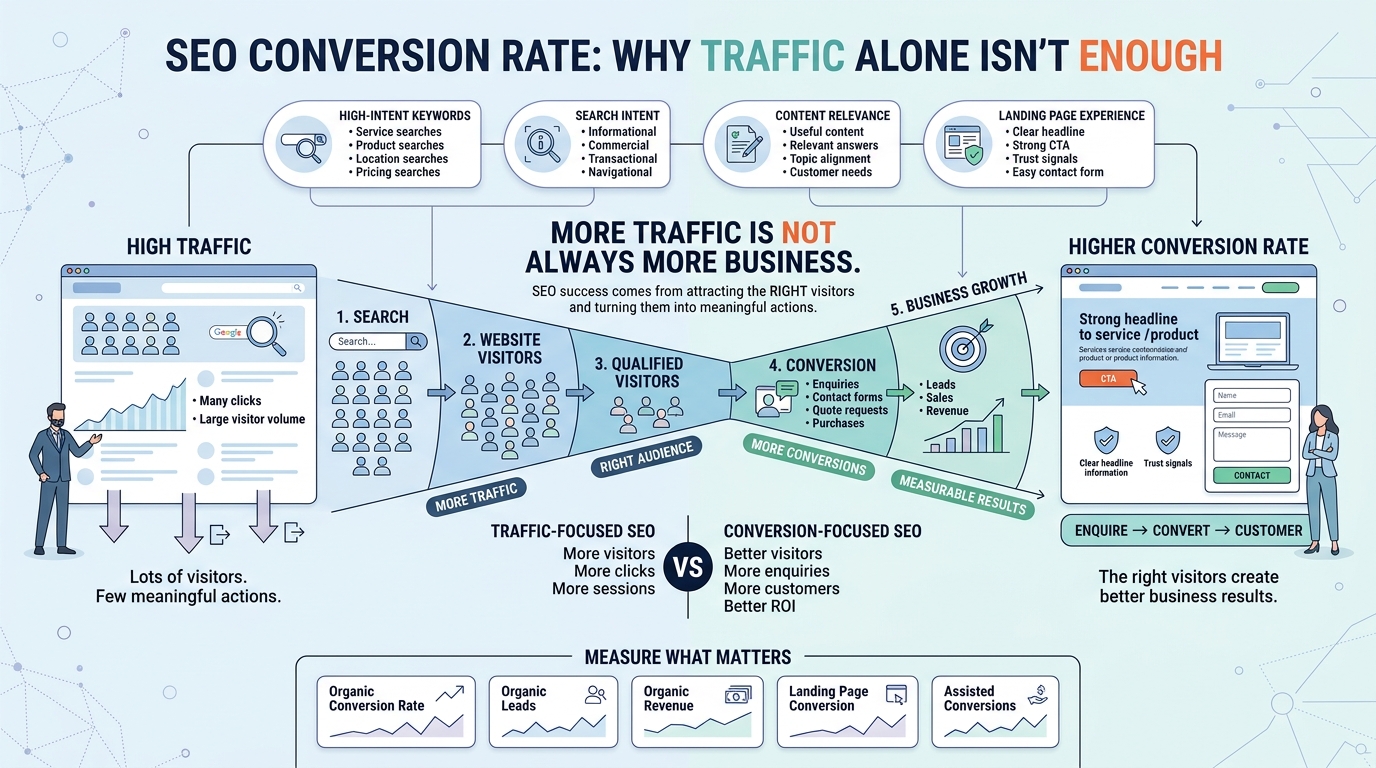
Conversion rate: Measure how many visitors complete valuable actions, such as submitting an enquiry or requesting a quotation.
-
Lead quality: Evaluate whether enquiries come from potential customers who match the business’s target market.
Businesses can use Google Search Console and Google Analytics 4 (GA4) to monitor search performance and understand visitor behaviour.
Google has also introduced a Generative AI performance report in Search Console, which provides insights into website impressions from generative AI features in Google Search, including AI Mode and AI Overviews.
By reviewing available performance data, businesses can identify which pages attract visibility and assess whether their website is contributing to meaningful business outcomes.
Common Google AI Mode SEO Mistakes Businesses Should Avoid
As AI-powered search becomes more prominent, some businesses may make unnecessary changes to their digital marketing strategies without understanding how these systems work.
To build a sustainable approach, businesses should avoid the following mistakes:
-
Ignoring traditional SEO: Assuming that conventional SEO practices are no longer relevant because of AI-powered search.
-
Publishing generic AI-generated content: Producing large amounts of repetitive content without adding original information or meaningful value.
-
Focusing only on AI visibility: Ignoring website traffic, customer enquiries, conversions, and other important business outcomes.
-
Overlooking website quality: Neglecting technical performance, mobile usability, and website navigation.
-
Using outdated information: Leaving inaccurate service descriptions, pricing, or business information on the website.
-
Expecting guaranteed AI citations: Assuming that specific optimisation techniques can guarantee a website will appear in AI-generated responses.
-
Ignoring customer search behaviour: Creating content without understanding the questions and information customers actually need.
Businesses should prioritise content quality, website performance, and customer experience rather than chasing short-term AI search trends.
Long-Term Opportunities for Businesses in AI-Powered Search
The development of AI-powered search creates opportunities for businesses to improve how they communicate their products, services, and expertise to potential customers.
Instead of focusing entirely on traditional keyword rankings, companies can develop a broader digital strategy that supports different stages of the customer journey.
Long-term opportunities include:
-
Building brand credibility: Publish useful information that demonstrates industry knowledge and establishes customer confidence.
-
Reaching potential customers earlier: Create educational content that helps people understand their problems and explore possible solutions.
-
Improving customer discovery: Maintain informative website pages that help search engines understand the business and its services.
-
Strengthening digital presence: Maintain consistent information across websites and relevant online platforms.
-
Generating valuable enquiries: Develop clear service pages and user-friendly enquiry processes that encourage interested visitors to contact the business.
Businesses that invest in useful content and a strong digital foundation can better prepare for future developments in search technology.
Conclusion
Google’s AI Mode is changing how people discover information, explore products, and evaluate businesses online. Through conversational searches, AI-generated responses, and supporting website links, users can explore complex topics and compare different options more easily.
For businesses, these developments create new opportunities to reach potential customers while introducing changes to how online visibility should be understood and measured.
However, maintaining a strong online presence requires more than simply following AI search trends. Businesses need a solid SEO foundation, informative website content, clear service information, and a user-friendly website experience.
By understanding changing customer behaviour and continuously improving their digital presence, businesses can remain competitive and connect with potential customers through the evolving Google Search experience.
FAQs
1. What is Google’s AI Mode?
Google’s AI Mode is an AI-powered search experience that allows users to ask detailed questions and receive comprehensive responses with links to relevant websites. It supports conversational searches, follow-up questions, and more detailed exploration of different topics.
2. How does Google AI Mode affect businesses?
Google AI Mode changes how potential customers discover information and evaluate businesses online. Companies may gain additional opportunities to reach users through relevant website links in AI-generated responses. However, visibility is not guaranteed, and businesses still need useful content and a strong website foundation.
3. Does traditional SEO still matter for Google AI Mode?
Yes. Google confirms that existing SEO best practices remain relevant for AI Mode and other AI-powered search experiences. Businesses should continue focusing on crawlability, helpful content, clear website structure, and a good page experience.
4. How can businesses improve their visibility in Google AI Mode?
Businesses can strengthen their search visibility by publishing original and informative content, maintaining technically accessible websites, improving internal linking, providing accurate business information, and following Google’s established SEO best practices. No specific technique guarantees inclusion in AI-generated responses.
5. How can I track my website’s performance in AI-powered search?
Businesses can use Google Search Console to monitor search performance and access available generative AI performance insights. Google Analytics 4 can also help evaluate website engagement, traffic, and conversions after visitors arrive on the website.