Achieving strong search engine rankings requires more than simply publishing new content or targeting popular keywords. As competition continues to increase across almost every industry, businesses need a clear understanding of where their website performs well and, more importantly, where valuable opportunities are being missed.
Many companies invest in search engine optimisation (SEO) without fully understanding why competitors consistently rank higher in search results. In many cases, the problem is not a lack of effort but a lack of strategic insight. Businesses may be targeting the wrong keywords, overlooking important topics, or missing content that potential customers are actively searching for.
This is where SEO gap analysis becomes an essential part of a successful SEO strategy.
SEO gap analysis is the process of identifying opportunities that your website has not yet captured compared to competitors or market demand. By discovering missing keywords, content gaps, and optimisation opportunities, businesses can create a more focused SEO strategy that attracts qualified traffic and improves long-term search visibility.
Rather than guessing which pages to create next, SEO gap analysis provides data-driven insights that help businesses invest their time and resources where they are most likely to achieve meaningful SEO results.
What Is SEO Gap Analysis?
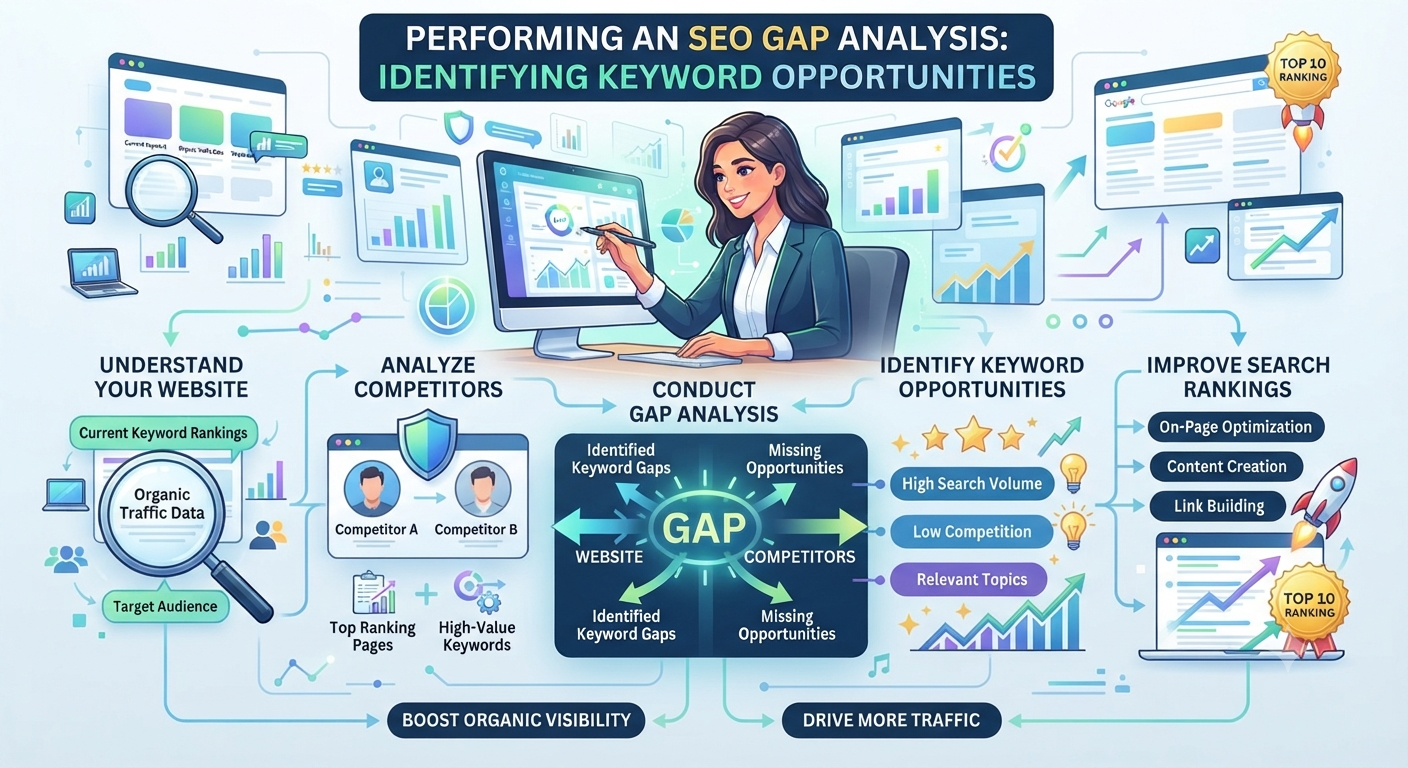
SEO gap analysis is the process of comparing your website’s current SEO performance against competitors and search demand to identify areas where improvements can be made.
Instead of only measuring existing rankings, gap analysis looks for opportunities that are currently missing from your website.
An SEO gap analysis may examine:
- Target keywords
- Website content
- Landing pages
- Competitor rankings
- Search intent
- Internal linking
- Technical SEO
- Organic search visibility
The objective is to discover opportunities that can strengthen your website’s overall SEO performance while helping your business compete more effectively in search results.
Why Businesses Need SEO Gap Analysis
Many businesses focus only on improving existing pages without considering whether important opportunities are being overlooked.
For example, competitors may rank for valuable keywords that your website has never targeted.
Similarly, customers may be searching for questions or services that are not currently covered on your website.
Without identifying these gaps, businesses may continue investing in SEO activities that deliver only limited results.
SEO gap analysis helps businesses:
- Discover missed keyword opportunities
- Expand website content strategically
- Improve search visibility
- Increase qualified organic traffic
- Strengthen long-term SEO performance
Instead of relying on assumptions, businesses gain a clearer understanding of where future growth opportunities exist.
Identifying Keyword Gaps
One of the most valuable aspects of SEO gap analysis is identifying keyword gaps.
Keyword gaps occur when competitors rank for search terms that your website does not currently target or rank for effectively.
These opportunities may include:
- High-intent commercial keywords
- Informational search queries
- Local search terms
- Industry-specific phrases
- Long-tail keywords
Adding relevant content around these missing keywords helps businesses reach new audiences while expanding their overall search visibility.
Rather than competing for only a few highly competitive keywords, businesses can build authority across a much broader range of relevant searches.
Discovering Content Opportunities
SEO is no longer simply about keywords.
Search engines increasingly reward websites that provide comprehensive, useful, and well-structured content.
A gap analysis helps identify subjects that competitors cover successfully but are missing from your own website.
Examples include:
- Educational blog articles
- Service explanations
- Industry guides
- Frequently asked questions
- Case studies
- Supporting landing pages
Expanding content strategically allows businesses to demonstrate expertise while providing greater value to potential customers.
This also supports topical authority by covering a wider range of related subjects within the same industry.
Understanding Customer Search Intent
Not every keyword represents the same type of search.
Some users are gathering information, while others are ready to make a purchase or request professional services.
SEO gap analysis helps businesses understand whether their website addresses different stages of the customer journey.
Search intent may include:
- Informational searches
- Commercial research
- Service comparisons
- Purchase decisions
- Local business searches
Creating content that aligns with user intent improves both SEO performance and the likelihood of converting visitors into customers.
When businesses understand what users are actually looking for, they can produce content that answers questions more effectively while supporting stronger engagement and higher conversion rates.
Analysing Competitor Strengths
SEO gap analysis is not about copying competitors. Instead, it helps businesses understand why competing websites perform well in search results and where opportunities exist to improve their own SEO strategy.
By reviewing competitor websites, businesses can identify:
- High-performing content
- Frequently targeted keywords
- Well-structured service pages
- Internal linking strategies
- Content categories
- User experience improvements
Understanding these strengths allows businesses to develop better content and more effective SEO strategies while maintaining their own unique brand identity.
Rather than competing blindly, businesses can make informed decisions based on real market data.
Improving Website Structure
A successful SEO strategy depends not only on quality content but also on how that content is organised.
SEO gap analysis often reveals weaknesses in a website’s structure that may limit search engine visibility.
Examples include:
- Missing service pages
- Poor navigation
- Weak internal linking
- Duplicate content
- Thin category pages
- Orphan pages
Improving website structure makes it easier for both visitors and search engines to discover important content.
A logical site structure also encourages users to explore additional pages, increasing engagement and supporting stronger SEO performance.
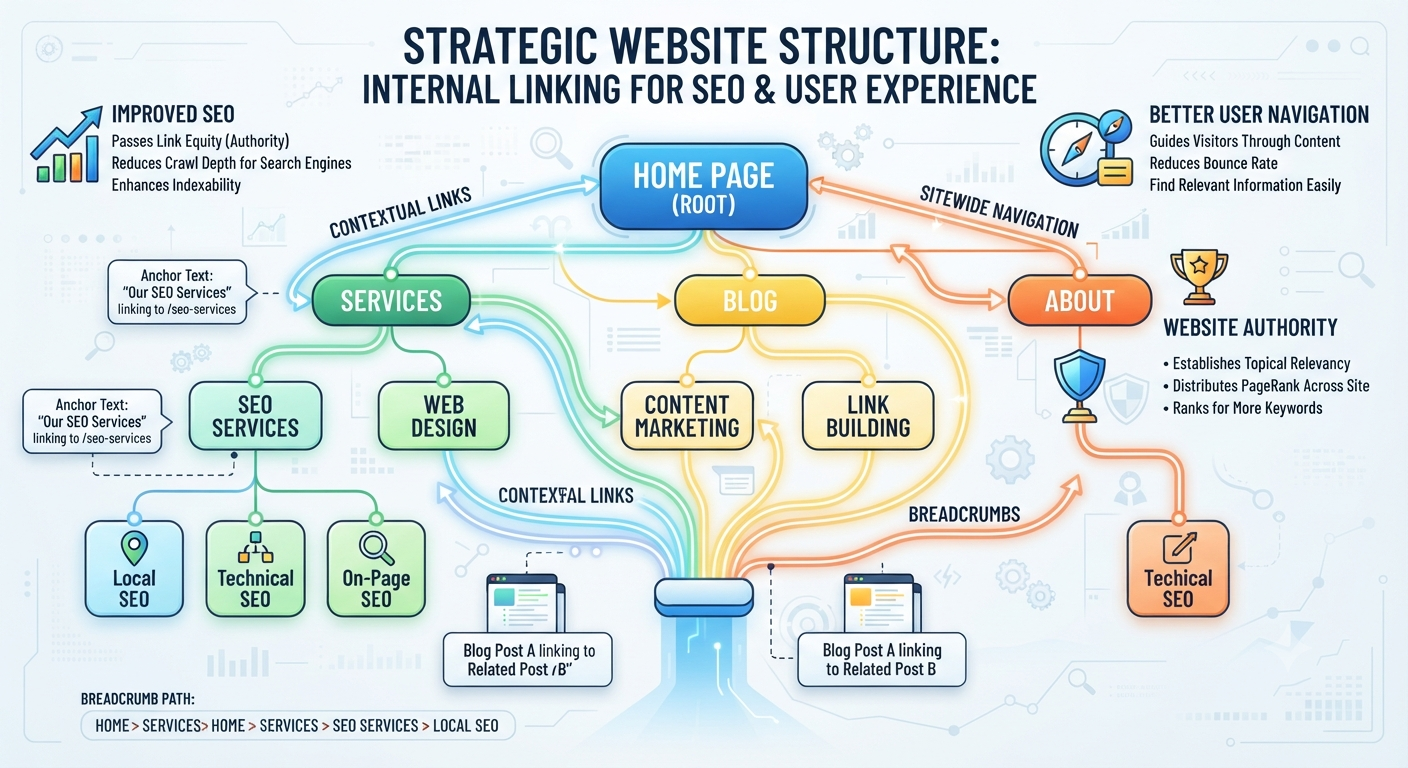
Strengthening Internal Linking
Internal links help search engines understand the relationship between different pages while guiding visitors to relevant information.
During an SEO gap analysis, businesses often discover pages that are not properly connected.
Improving internal linking can help:
- Distribute page authority
- Improve crawlability
- Support keyword relevance
- Increase page views
- Reduce bounce rates
A well-planned internal linking strategy helps search engines index content more effectively while creating a smoother browsing experience for users.
Supporting Long-Term Content Planning
Many businesses create content without a clear long-term strategy.
As a result, they may publish articles that overlap, compete with one another, or fail to address important customer questions.
SEO gap analysis provides valuable insights that help businesses develop a structured content plan.
Instead of guessing what to publish next, businesses can prioritise content based on:
- Search demand
- Customer needs
- Competitor gaps
- Business objectives
- Keyword opportunities
This strategic approach helps ensure every new page contributes to stronger SEO performance and supports broader business goals.
Improving Organic Traffic Quality
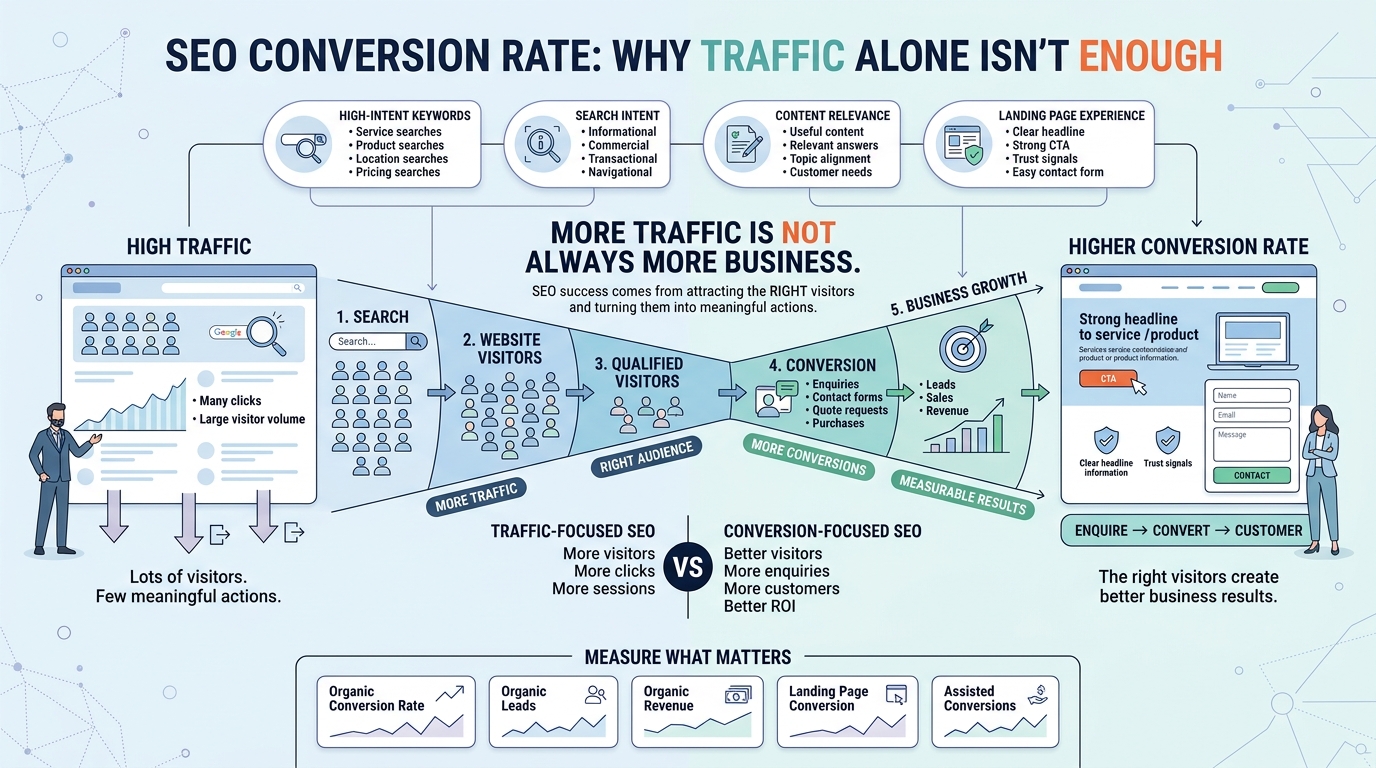
Generating more website traffic is important, but attracting the right visitors is even more valuable.
SEO gap analysis focuses on identifying opportunities that attract users who are genuinely interested in a business’s products or services.
By targeting relevant keywords and creating content that matches search intent, businesses can attract visitors who are more likely to:
- Request quotations
- Contact the business
- Book consultations
- Purchase products
- Become long-term customers
Higher-quality organic traffic often leads to improved conversion rates and better returns on SEO investment.
Why Professional SEO Gap Analysis Matters
Although businesses can perform basic research using free SEO tools, professional SEO gap analysis provides a far more detailed and accurate assessment.
SEO specialists evaluate multiple factors simultaneously, including keyword opportunities, competitor performance, technical SEO, content quality, and search intent.
A professional SEO gap analysis may include:
- Competitor keyword analysis
- Content gap identification
- Technical SEO review
- Internal linking assessment
- Search intent evaluation
- Ranking opportunity analysis
- Content recommendations
These insights help businesses prioritise the improvements that will have the greatest impact on long-term SEO performance.
Long-Term Benefits of SEO Gap Analysis
Regular SEO gap analysis offers many lasting advantages.
Benefits include:
✔ Discover new ranking opportunities
✔ Expand keyword coverage
✔ Improve content strategy
✔ Increase organic traffic
✔ Strengthen website authority
✔ Improve search visibility
✔ Support long-term business growth
✔ Stay competitive in search results
Rather than relying on assumptions, businesses can make informed SEO decisions based on real data, helping them build a stronger online presence and achieve sustainable growth over time.
Conclusion
Search engine optimisation is an ongoing process that requires continuous improvement, strategic planning, and regular evaluation. As search trends evolve and competitors strengthen their online presence, businesses that rely solely on existing SEO strategies may gradually lose valuable ranking opportunities.
SEO gap analysis provides a structured way to identify what is missing from a website’s current SEO strategy. By analysing keyword gaps, content opportunities, competitor performance, website structure, and user search intent, businesses can uncover areas for improvement that may have otherwise gone unnoticed.
Rather than creating content based on assumptions, SEO gap analysis enables businesses to prioritise high-value opportunities that are more likely to increase organic traffic, improve search visibility, and generate qualified leads. It also helps businesses make better use of their existing website by strengthening content, improving internal linking, and expanding topical coverage.
Businesses that regularly perform SEO gap analysis are better positioned to adapt to changing search engine algorithms, outperform competitors, and achieve sustainable long-term growth. When combined with professional SEO planning and continuous optimisation, gap analysis becomes a valuable tool for building a stronger online presence and maintaining a competitive advantage in search results.
FAQs
1. What is SEO gap analysis?
SEO gap analysis is the process of identifying opportunities your website is currently missing compared to competitors or search demand. It helps businesses discover untapped keywords, missing content, and optimisation opportunities that can improve search engine rankings and organic traffic.
2. How is SEO gap analysis different from an SEO audit?
An SEO audit focuses on evaluating the overall health and technical performance of a website, including crawlability, indexing, page speed, and on-page SEO. SEO gap analysis, on the other hand, compares your website against competitors and market opportunities to identify missing keywords, content, and strategic improvements.
3. Why is SEO gap analysis important for businesses?
SEO gap analysis helps businesses understand where valuable ranking opportunities exist. By identifying keyword gaps, content gaps, and competitor strengths, companies can create a more targeted SEO strategy that attracts qualified traffic and supports long-term business growth.
4. How often should SEO gap analysis be performed?
SEO gap analysis should be carried out regularly because search trends, customer behaviour, and competitor strategies continually change. Many businesses perform a comprehensive analysis every six to twelve months, while highly competitive industries may benefit from more frequent reviews.
5. Can SEO gap analysis improve organic traffic?
Yes. By identifying untapped keyword opportunities, improving content coverage, and aligning website pages with user search intent, SEO gap analysis helps businesses attract more relevant organic traffic and improve their overall search engine visibility.