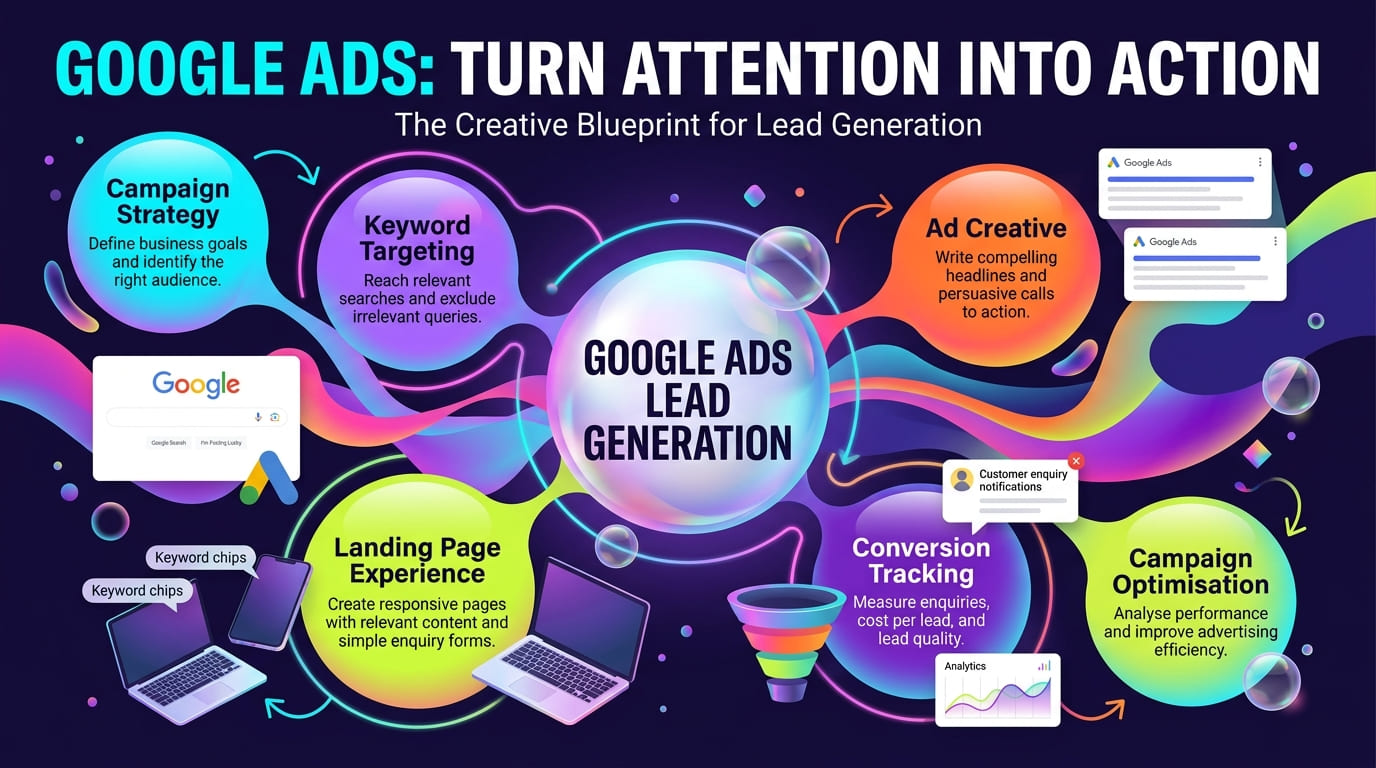
Google Ads is a digital advertising platform that helps businesses reach potential customers when they search for relevant products or services. By displaying advertisements to users who are actively looking for solutions, businesses can attract website visitors, generate enquiries, and create opportunities to increase sales.
However, running advertisements does not automatically guarantee valuable leads. Businesses need a clear campaign strategy, relevant keywords, compelling advertising messages, and a website that encourages visitors to take action.
A well-planned Google Ads campaign can help businesses connect with their target audience and make better use of their advertising budget. By combining effective targeting, relevant landing pages, and accurate conversion tracking, businesses can measure campaign performance and identify opportunities for improvement.
What Is Google Ads Lead Generation?
A Google Ads campaign for lead generation is a paid advertising strategy designed to encourage potential customers to complete specific actions, such as submitting an enquiry form, requesting a quotation, booking a consultation, or contacting a business.
Unlike campaigns that focus mainly on website traffic or brand awareness, lead generation campaigns aim to attract users who are more likely to become customers.
For example, a website development company can use Google Ads to reach businesses searching for website design services. When users click the advertisement, they can be directed to a relevant landing page that explains the services and provides an easy way to request a quotation.
Common lead generation objectives include:
- Generating website enquiries
- Receiving quotation requests
- Increasing business telephone calls
- Encouraging consultation bookings
- Attracting potential business-to-business customers
- Collecting qualified leads for follow-up
The right campaign objective depends on the business model, target audience, and desired customer action.
Why Google Ads Is Important for Lead Generation
Google Ads allows businesses to reach users who are actively searching for information, products, or services. This makes search advertising useful for businesses that want to connect with potential customers at the moment they express an interest.
A properly managed campaign can support business growth by helping companies reach relevant audiences and measure the results of their advertising efforts.
Key benefits include:
- Reach potential customers: Display advertisements to users searching for relevant products or services.
- Target specific locations: Focus campaigns on geographical areas where the business operates.
- Control advertising budgets: Set campaign budgets and manage spending according to business objectives.
- Measure campaign performance: Review clicks, conversions, advertising costs, and lead quality.
- Generate business enquiries: Encourage potential customers to request information, quotations, or consultations.
- Improve campaign efficiency: Use performance data to refine targeting, advertisements, and bidding strategies.
Although Google Ads can help businesses attract potential leads, actual results depend on competition, campaign setup, budget, landing page quality, and the relevance of the advertisements.
How to Create a Google Ads Campaign for Lead Generation
Creating an effective Google Ads campaign involves several important steps. Each stage should support the overall goal of attracting relevant prospects and encouraging meaningful enquiries.
Define Your Campaign Goals
Before launching a campaign, identify what your business wants to achieve. Clear objectives help determine the appropriate campaign settings, advertising messages, and performance measurements.
For example, a service-based business may want to generate quotation requests, while a professional consultancy may prioritise consultation bookings.
Businesses should consider:
- The type of leads they want to attract
- Their ideal customer profile
- The services or products they want to promote
- Their advertising budget
- The actions visitors should complete
- The expected value of a new customer
Defining these goals helps businesses create a focused campaign instead of spending money on clicks that do not support their objectives.
Choose Relevant Keywords
Keywords determine which searches may trigger advertisements in a Google Search campaign. Selecting relevant keywords helps businesses reach users whose searches align with their products or services.
For example, a website design company may target keyword themes such as:
- Website design services
- Website development company
- Corporate website design
- E-commerce website development
- Website redesign services
The best keywords depend on the services offered and the search behaviour of the intended audience.
Businesses can use Google Keyword Planner to discover keyword ideas and review estimated search activity and advertising forecasts.
It is also important to understand keyword intent. Someone searching for general information may not be ready to contact a service provider, while someone looking for a quotation may have a stronger intention to purchase.
Write Compelling Advertisement Copy
Advertising copy plays an important role in attracting attention and encouraging potential customers to visit a website.
A good advertisement should communicate the service clearly, highlight relevant benefits, and provide a suitable next step.
Businesses should focus on:
- Writing clear and relevant headlines
- Explaining the value of their services
- Matching advertisement copy to the targeted keywords
- Using specific calls to action
- Avoiding misleading claims
- Highlighting genuine business strengths
For example, an advertisement promoting website development services could use a headline such as “Professional Website Design Services” and a call to action such as “Request a Quote”.
The advertisement should set realistic expectations and direct users to a page that provides the information promised.
Target the Right Audience
Audience and location settings help businesses focus their advertising on relevant potential customers.
For businesses operating in Malaysia, location targeting can be configured to focus on areas such as Kuala Lumpur, Selangor, or other locations the business serves.
When setting up a campaign, consider:
- Location targeting: Select areas where your business can provide its products or services.
- Language settings: Choose languages suitable for your intended audience and advertising content.
- Audience segments: Use relevant audience information where appropriate and supported by the campaign type.
- Customer needs: Align advertisements with the problems or requirements your services address.
Businesses should also review Google’s location options carefully to ensure their advertisements reach the intended geographical audience.
Relevant targeting can reduce unnecessary advertising expenditure and improve the likelihood of attracting suitable enquiries.
How to Optimise Google Ads for Lead Generation
A landing page is the webpage visitors reach after clicking an advertisement. It plays an important role in converting advertising traffic into enquiries and potential customers.
Even if an advertisement receives many clicks, a poorly designed landing page can discourage visitors from taking action.
Businesses should focus on the following elements:
- Relevant content: Ensure the page matches the advertisement and the user’s search intent.
- Clear headlines: Explain the service and its main benefits.
- Simple enquiry forms: Request only the information necessary to respond to potential customers.
- Visible calls to action: Make it easy for visitors to request a quotation or contact the business.
- Mobile-friendly design: Ensure the page works properly on smartphones and tablets.
- Fast loading speed: Reduce unnecessary delays that may affect the visitor experience.
- Trust signals: Include genuine testimonials, relevant project examples, or business contact details where appropriate.
For example, users who click an advertisement for e-commerce website development should be directed to a page that explains the relevant service rather than a general page with unrelated information.
A relevant landing page creates a more consistent experience and helps visitors understand what to do next.
A well-designed landing page can help businesses turn paid traffic into potential customers. Explore our website design services in Malaysia to learn how a professional website can support your business goals. You can also visit SEOYV to learn more about our digital services.
How to Set a Budget and Choose a Bidding Strategy
Advertising budgets and bidding strategies influence how a Google Ads campaign competes for available advertising opportunities.
Businesses should establish a realistic budget based on their marketing objectives, financial resources, and expected customer value.
Google Ads offers different bidding strategies depending on the campaign type and advertising goals.
Common options include:
- Maximise Clicks: Focuses on generating clicks within the available budget.
- Maximise Conversions: Uses automated bidding to pursue conversions based on the campaign’s available data and settings.
- Target CPA: Aims to generate conversions at a specified average cost per acquisition when the strategy is suitable for the campaign.
The appropriate bidding strategy depends on the campaign objective, conversion tracking setup, and available performance data.
Businesses should avoid choosing an arbitrary target cost per lead without considering the value of the leads they receive.
For example, a lead that results in a high-value business contract may justify a higher acquisition cost than an enquiry for a low-value product.
Regularly reviewing advertising expenditure and lead quality helps businesses determine whether their campaigns are commercially sustainable.
How to Track Google Ads Lead Generation Results
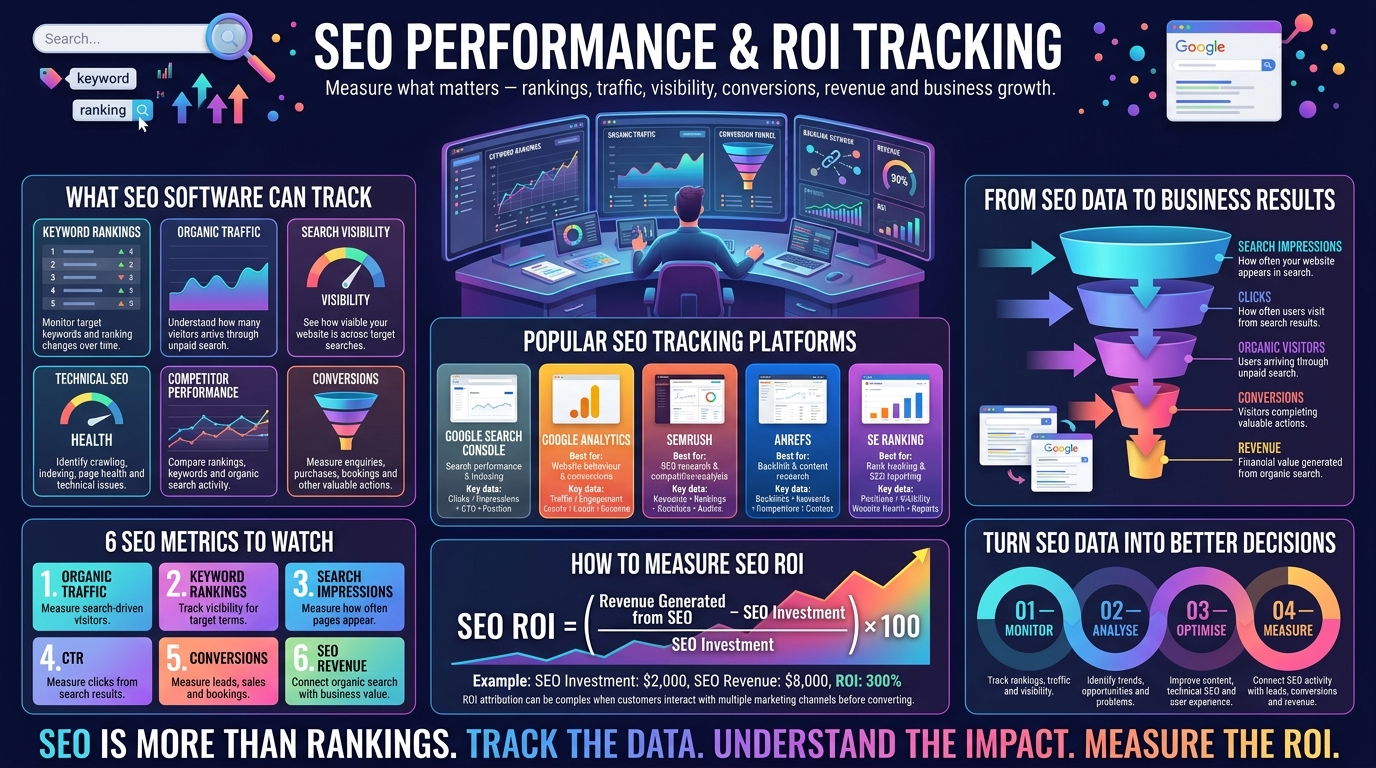
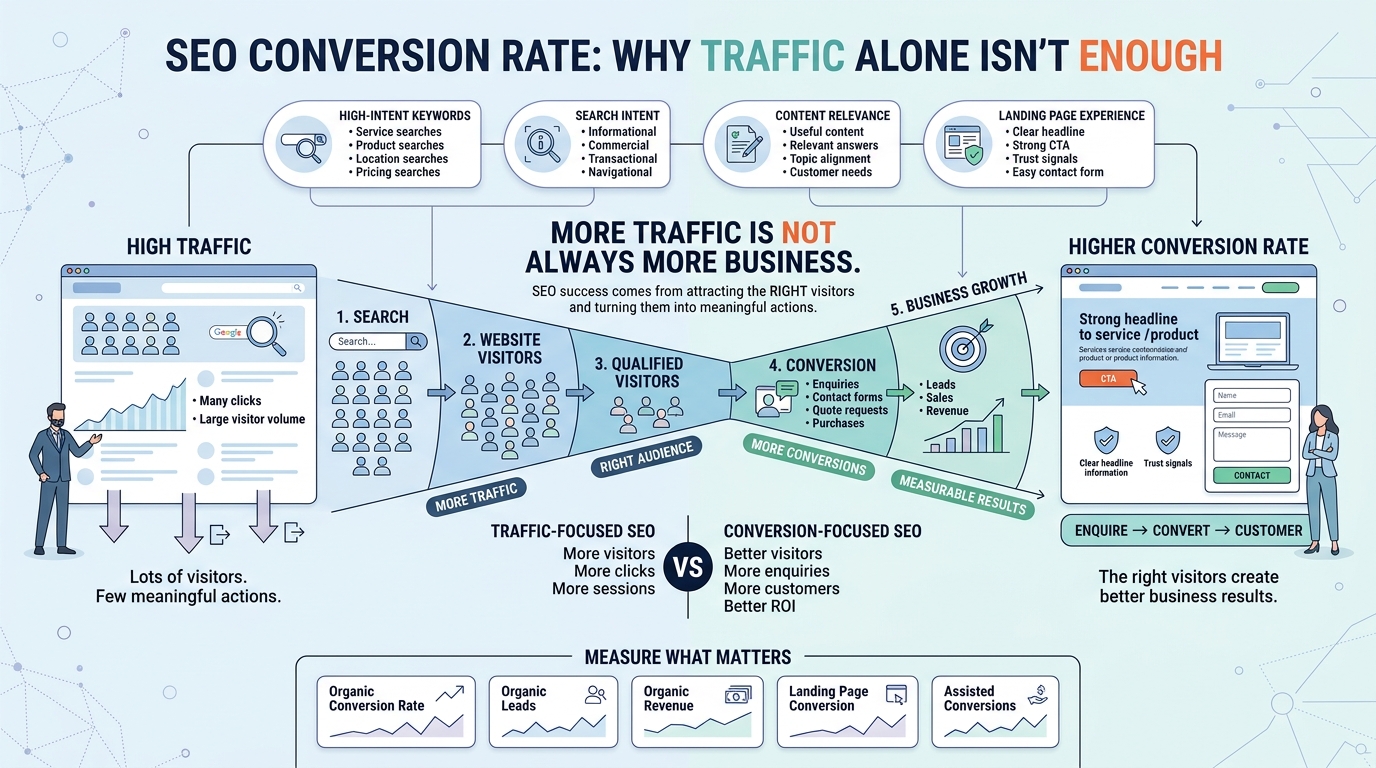
Conversion tracking helps businesses understand whether their advertisements are generating valuable actions rather than simply attracting website traffic.
Without accurate tracking, it can be difficult to identify which campaigns contribute to meaningful enquiries.
Businesses can measure relevant actions such as:
- Contact form submissions
- Quotation requests
- Telephone calls
- Consultation bookings
- Completed purchases, where applicable
- Other valuable customer actions
Google Ads conversion tracking can measure selected advertising outcomes, while Google Analytics 4 can provide additional information about website visits and user behaviour. Google Tag Manager can also help manage tracking tags when configured appropriately.
Businesses should test their tracking setup before relying on the data for campaign decisions. A button click should not automatically be counted as a completed lead if the intended enquiry was never submitted.
It is also important to distinguish between the number of leads generated and the quality of those leads. An advertisement may attract many enquiries, but not every enquiry will represent a suitable potential customer.
Combining advertising data with sales outcomes can provide a clearer understanding of campaign effectiveness.
Important Metrics to Measure in a Google Ads Campaign
Monitoring campaign performance helps businesses identify strengths, detect problems, and make informed decisions about future advertising activities.
Important metrics include:
- Impressions: The number of times advertisements are displayed.
- Click-through rate (CTR): The percentage of impressions that result in clicks.
- Average cost per click (CPC): The average amount paid for each click.
- Conversion rate: The percentage of relevant interactions that result in a conversion.
- Cost per lead (CPL): The advertising cost associated with generating a lead.
- Lead quality: How closely enquiries match the business’s target customers and requirements.
Cost per lead can be calculated by dividing total advertising spend by the number of leads generated during the same period.
For example, if a business spends RM1,000 and generates 25 leads, its advertising cost per lead is RM40.
However, a lower cost per lead does not always indicate better performance. Businesses should also consider whether the leads are relevant and how many eventually become paying customers.
Evaluating several metrics together provides a more complete picture of advertising performance.
Common Google Ads Lead Generation Mistakes to Avoid
Poor campaign management can waste advertising budgets and attract visitors who are unlikely to become customers.
Businesses should avoid these common mistakes:
- Using irrelevant keywords: Poor keyword selection may attract searches unrelated to the services offered.
- Writing unclear advertisements: Potential customers may ignore advertisements that fail to communicate the value of the offering.
- Sending users to irrelevant pages: A mismatch between advertisements and landing pages can discourage enquiries.
- Ignoring conversion tracking: Inaccurate or missing data makes campaign optimisation more difficult.
- Focusing only on clicks: High traffic does not necessarily produce qualified leads.
- Neglecting negative keywords: Irrelevant searches may consume budget without delivering business value.
- Ignoring lead quality: A large number of enquiries may not translate into actual sales.
- Making changes without reviewing data: Unnecessary changes can make it harder to evaluate campaign performance.
Regular monitoring and evidence-based adjustments help businesses identify areas for improvement and use their advertising budget more effectively.
How to Improve Google Ads Lead Generation Results
Once a campaign is running, businesses should review its performance and identify opportunities to improve the quality and quantity of enquiries.
Useful optimisation activities include:
- Reviewing search terms to identify irrelevant queries
- Refining keyword targeting and match types
- Improving advertisement headlines and descriptions
- Checking that landing pages match user expectations
- Testing enquiry forms and conversion tracking
- Evaluating lead quality and customer follow-up outcomes
- Adjusting budgets according to campaign performance
Businesses should make changes based on reliable data rather than assumptions. They should also allow sufficient time to assess the impact of significant adjustments.
Continuous optimisation helps businesses understand which advertising approaches contribute to their objectives and which areas require further attention.
Conclusion
Creating an effective Google Ads campaign for lead generation requires careful planning, relevant keyword targeting, compelling advertisement copy, and a landing page that encourages visitors to take action.
Businesses must also establish accurate conversion tracking, monitor advertising costs, and evaluate the quality of enquiries they receive. These activities help identify opportunities to improve campaign performance and make better use of marketing budgets.
Whether a business wants to increase quotation requests, attract potential clients, or generate more service enquiries, a well-managed Google Ads campaign can support its wider digital marketing objectives.
Combining paid advertising with a relevant website experience and consistent performance measurement helps businesses build a more structured approach to online lead generation.
FAQs
1. What is a Google Ads campaign for lead generation?
A Google Ads campaign for lead generation is a paid advertising strategy designed to encourage potential customers to complete actions such as submitting enquiry forms, requesting quotations, booking consultations, or calling a business. Its main objective is to generate relevant enquiries rather than simply increase website traffic.
2. How much does a Google Ads campaign cost?
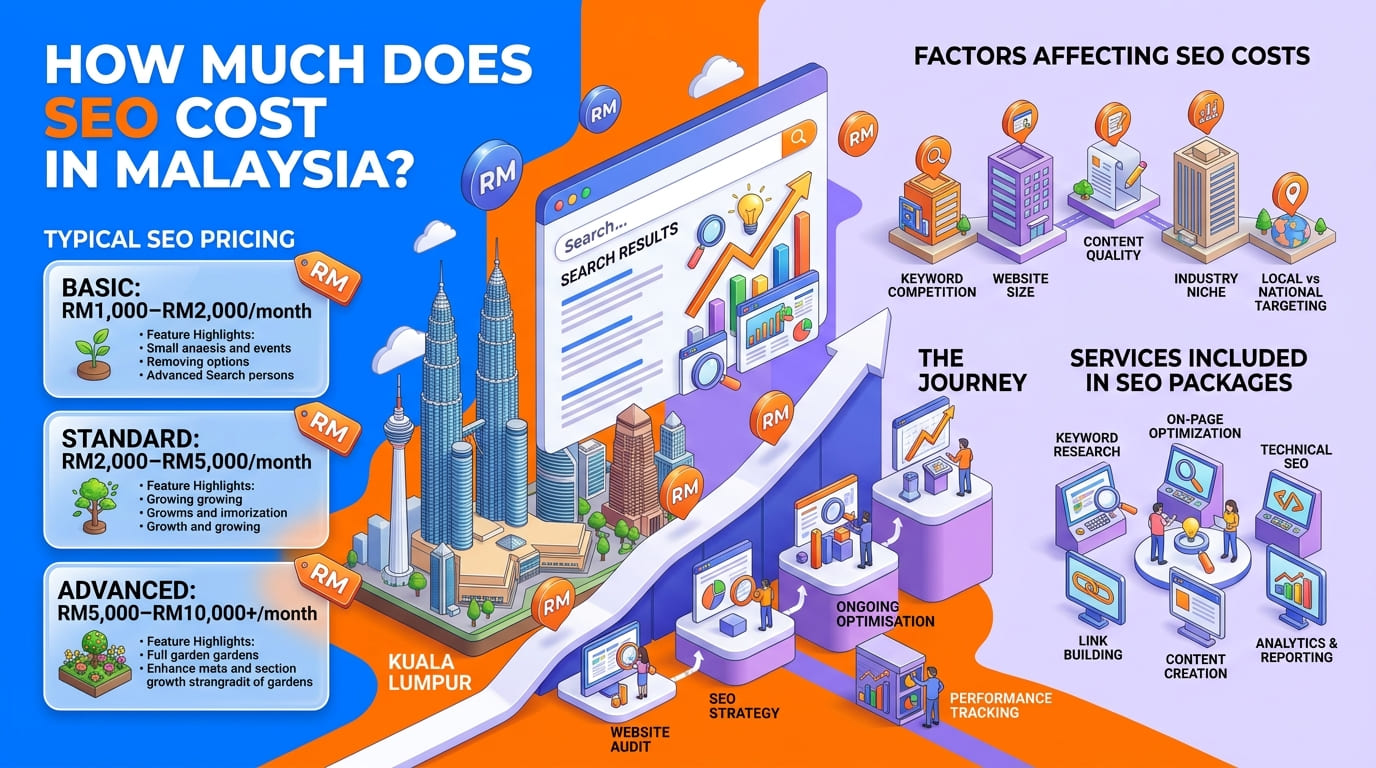
The cost of a Google Ads campaign depends on factors such as keyword competition, industry, targeting, bidding strategy, and advertising budget. Businesses can set campaign budgets and monitor their spending. The appropriate budget should reflect their objectives and the value of the customers they want to acquire.
3. Which Google Ads campaign type is best for lead generation?
Search campaigns are often a practical starting point for businesses targeting people who are actively searching for relevant services. Other campaign types, including Performance Max, may also support lead generation depending on the business objectives, campaign setup, conversion tracking, and available assets.
4. How can I improve the quality of leads from Google Ads?
Businesses can improve lead quality by targeting relevant keywords, excluding irrelevant searches, writing specific advertisements, and directing users to suitable landing pages. Tracking qualified enquiries and reviewing which leads become customers can also help improve campaign decisions.
5. Why is conversion tracking important for Google Ads?
Conversion tracking helps businesses measure valuable actions generated by their advertisements, such as completed enquiry forms and calls. This information helps advertisers evaluate campaign performance, compare results, and make informed decisions about targeting, bidding, and advertising budgets.