If you want to improve rankings, increase traffic, and outperform competitors, you need more than good content—you need a strong SEO competitor analysis strategy.
SEO competitor analysis helps you understand what is working in your industry, which keywords drive traffic, and where your competitors are earning backlinks. Instead of guessing, you make data-driven decisions that improve visibility and search performance.
This guide will walk you through the complete process step by step.
What Is SEO Competitor Analysis?
SEO competitor analysis is the process of examining competing websites to understand their strengths, weaknesses, and ranking strategies.
It involves analyzing:
-
Target keywords
-
Content structure
-
Backlink profiles
-
Technical SEO setup
-
Content gaps
-
Internal linking strategies
The goal is not to copy competitors—but to discover opportunities they may have missed and areas where you can outperform them.
A well-executed SEO competitor analysis gives you clarity on:
-
Why competitors rank higher
-
What type of content performs best
-
Which keywords are achievable
-
Where backlink opportunities exist
Step 1 – Identify Your True SEO Competitors
Your business competitors are not always your SEO competitors.
Search your main target keywords in Google and identify which websites consistently appear on page one. These are your real search competitors.
Focus on:
-
Industry blogs
-
Service websites
-
Niche authority sites
-
Large media publications
Select 3–5 strong competitors for analysis. This makes your SEO competitor analysis focused and manageable.
Step 2 – Analyze Competitor Keywords
Keyword research is the foundation of SEO competitor analysis.
Use tools like:
-
Google Search
-
Google Search Console
-
Ahrefs
-
SEMrush
-
Ubersuggest
Look for:
-
High-traffic keywords
-
Long-tail opportunities
-
Featured snippet rankings
-
Keywords you don’t currently target
Pay special attention to keyword gaps—terms your competitors rank for but you don’t. These gaps often represent easy wins.
Create a spreadsheet comparing:
-
Keyword
-
Search volume
-
Ranking position
-
Content type
This gives you a roadmap for content expansion.
Step 3 – Evaluate Competitor Content Strategy
Next, examine their top-performing pages.
Ask:
-
Are they publishing long-form content?
-
Do they use structured headings (H2, H3)?
-
Do they answer search intent clearly?
-
Are they targeting informational or transactional queries?
Notice patterns:
-
FAQ sections
-
Data statistics
-
Step-by-step guides
-
Case studies
Strong competitors often structure content to win featured snippets and position zero.
Your goal is to create better, clearer, and more valuable content—not just longer articles.
Step 4 – Study Their Backlink Profile
Backlinks remain a major ranking factor.
During your competitor research process, review:
-
Number of referring domains
-
Domain authority
-
Types of backlinks (guest posts, directories, media mentions)
-
Anchor text distribution
Look for:
-
Repeated linking domains
-
Industry resource pages
-
Broken link opportunities
If multiple competitors receive links from the same websites, those sites may be open to linking to you as well.
Backlink analysis reveals authority gaps and outreach opportunities.
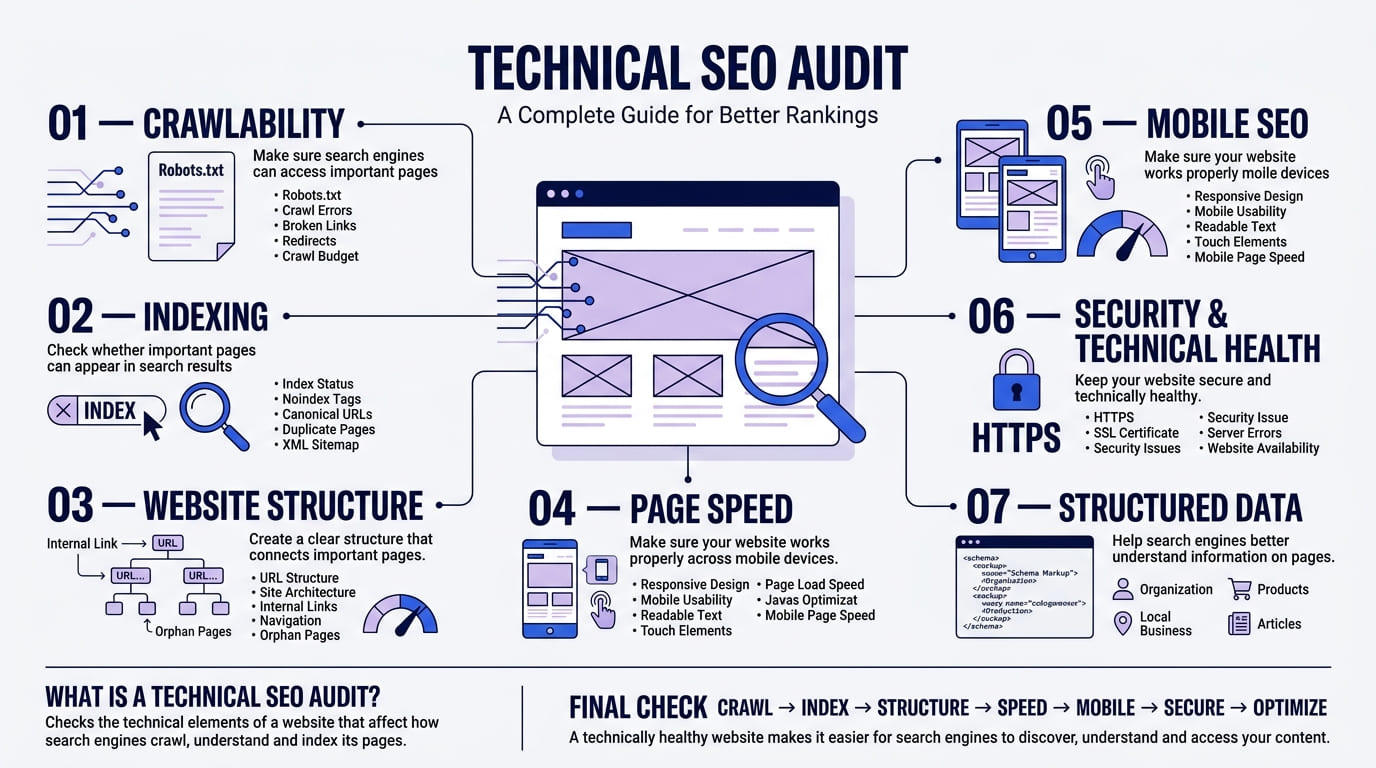
Step 5 – Review Technical SEO Factors
Even great content won’t rank if technical SEO is weak.
Check competitor:
-
Page speed
-
Mobile responsiveness
-
URL structure
-
Internal linking
-
Schema markup
-
Core Web Vitals
If competitors load faster or have cleaner structure, that may explain ranking differences.
Technical improvements often produce faster SEO results than content updates alone.
Step 6 – Identify Content Gaps and Opportunities
One of the most powerful outcomes of analyzing competitors’ SEO strategies is discovering what hasn’t been covered.
Look for:
-
Underserved topics
-
Poorly explained sections
-
Outdated content
-
Missing FAQs
Then create:
-
More comprehensive guides
-
Updated statistics
-
Clearer explanations
-
Better structured pages
Instead of competing directly on saturated keywords, target strategic gaps.
Common Mistakes in SEO Competitor Analysis
Avoid these errors:
-
Copying competitor content
-
Targeting only high-volume keywords
-
Ignoring search intent
-
Focusing only on backlinks
-
Analyzing too many competitors
A focused and strategic approach delivers better results than overwhelming data collection.
How Often Should You Perform SEO Competitor Analysis?
SEO is dynamic. Rankings change frequently.
Best practice:
-
Light review monthly
-
Deep analysis quarterly
-
Full strategic audit annually
Regular monitoring keeps you ahead of market changes.
❓ FAQs
Is SEO competitor analysis legal?
Yes. It uses publicly available data and standard SEO tools.
How long does competitor analysis take?
Basic analysis can take a few hours. A full strategic audit may take several days.
Can small businesses benefit from SEO competitor analysis?
Absolutely. It helps identify achievable ranking opportunities with limited resources.
Conclusion
SEO competitor analysis is one of the most powerful strategies for improving search performance. By studying competitor keywords, content structure, backlinks, and technical setup, you gain valuable insights that guide smarter decisions.
Instead of guessing what works, you build a data-driven SEO strategy that positions your website ahead of the competition.
If you want expert support in building a winning SEO strategy, SEOYV provides advanced research, optimization, and growth solutions tailored to your industry.