Introduction
Search intent in SEO explains why users search for a specific keyword and what they expect to find. However, many websites struggle with traffic not because their content is bad, but because it does not match what users actually want. As a result, even well-written pages may fail to rank or convert.
Today, search engines are extremely good at understanding user intent. Therefore, pages that fail to align with that intent often rank poorly, even if they are keyword-optimized. On the other hand, content that clearly satisfies search intent tends to rank faster, attract higher-quality traffic, and convert more effectively.
In this guide, you will learn how search intent works, why it matters for SEO, and how to optimize your content so visitors are more likely to engage, trust your brand, and take action.
What Search Intent in SEO Really Means
Search intent in SEO refers to the purpose behind a user’s search query. In other words, it explains what the user wants to achieve when typing a keyword into Google. Some users want information, while others want to compare options or make a purchase.
Because of this, search engines prioritize results that best satisfy that goal. Therefore, ranking is no longer only about keywords. Instead, it focuses on context, relevance, and user expectations.
The Four Main Types of Search Intent
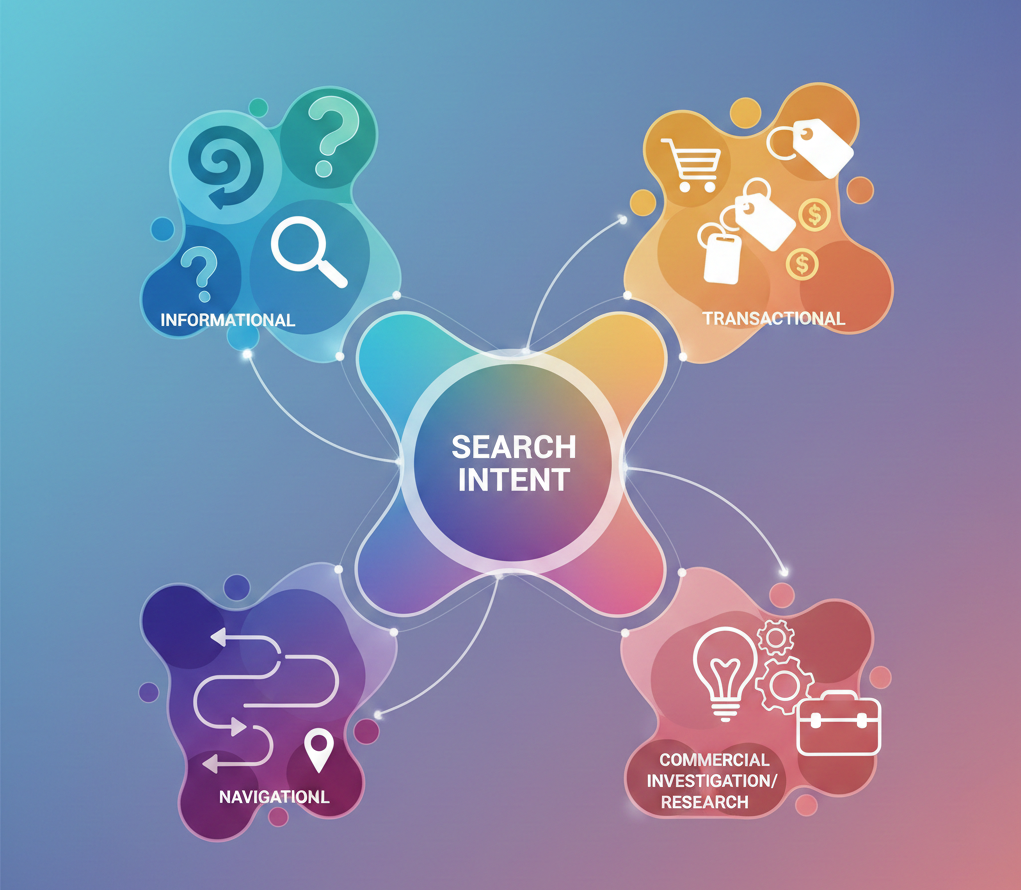
There are four common intent categories:
-
Informational – users want answers or knowledge
-
Navigational – users want to reach a specific website
-
Commercial investigation – users compare services or solutions
-
Transactional – users are ready to take action or buy
Understanding which intent your keyword matches helps determine your content format, structure, and call-to-action. Otherwise, users may leave quickly, which negatively affects rankings.
Why Search Intent Matters More Than Keywords Alone
In modern SEO, search intent matters more than keyword density. While two pages can target the same keyword, the page that better matches intent usually performs better.
For example, if users search for “SEO audit checklist,” they expect a step-by-step guide. However, if they land on a sales page instead, they will likely leave immediately. As a result, engagement drops and rankings suffer.
Search engines track important signals such as:
-
Time on page
-
Bounce rate
-
Scroll depth
-
Click behavior
Therefore, when content aligns with intent, users stay longer and interact more. Over time, this signals quality and improves visibility.
How to Identify Search Intent Behind Any Keyword
Fortunately, identifying search intent in SEO does not require guesswork. Instead, it requires careful observation.
Practical Ways to Identify Intent
-
Analyze top-ranking pages
Look at page one results. Are they blog posts, guides, or service pages? -
Study SERP features
Featured snippets, People Also Ask, and videos often reveal intent clearly. -
Check keyword modifiers
Words like how, best, pricing, or near me provide strong intent signals. -
Review user questions
Tools like Answer The Public reflect real user concerns.
Because of this approach, your content becomes more strategic and competitive.
Matching Content Format to Search Intent
One common SEO mistake is using the wrong content format. Therefore, intent must guide how content is structured.
Different intent types require different formats:
-
Informational → blog posts, guides, FAQs
-
Commercial → comparisons, case studies
-
Transactional → service pages, landing pages
-
Navigational → brand or homepage content
If intent is informational, long-form educational content works best. However, if intent is transactional, a blog post may never rank. As a result, format alignment directly affects performance.
Optimizing On-Page SEO Based on Search Intent
Once intent is clear, on-page SEO should support it. This ensures users feel they are in the right place.
Key areas to optimize include:
-
Title and headings – clearly reflect user intent
-
Introduction – confirm relevance immediately
-
Content depth – match user expectations
-
Internal links – guide users logically
For example, informational content should educate first, not sell aggressively. Meanwhile, commercial pages should highlight value and trust signals.
Internal link example:
Link to: Common SEO keyword mistakes
How Search Intent Impacts Conversion Rates
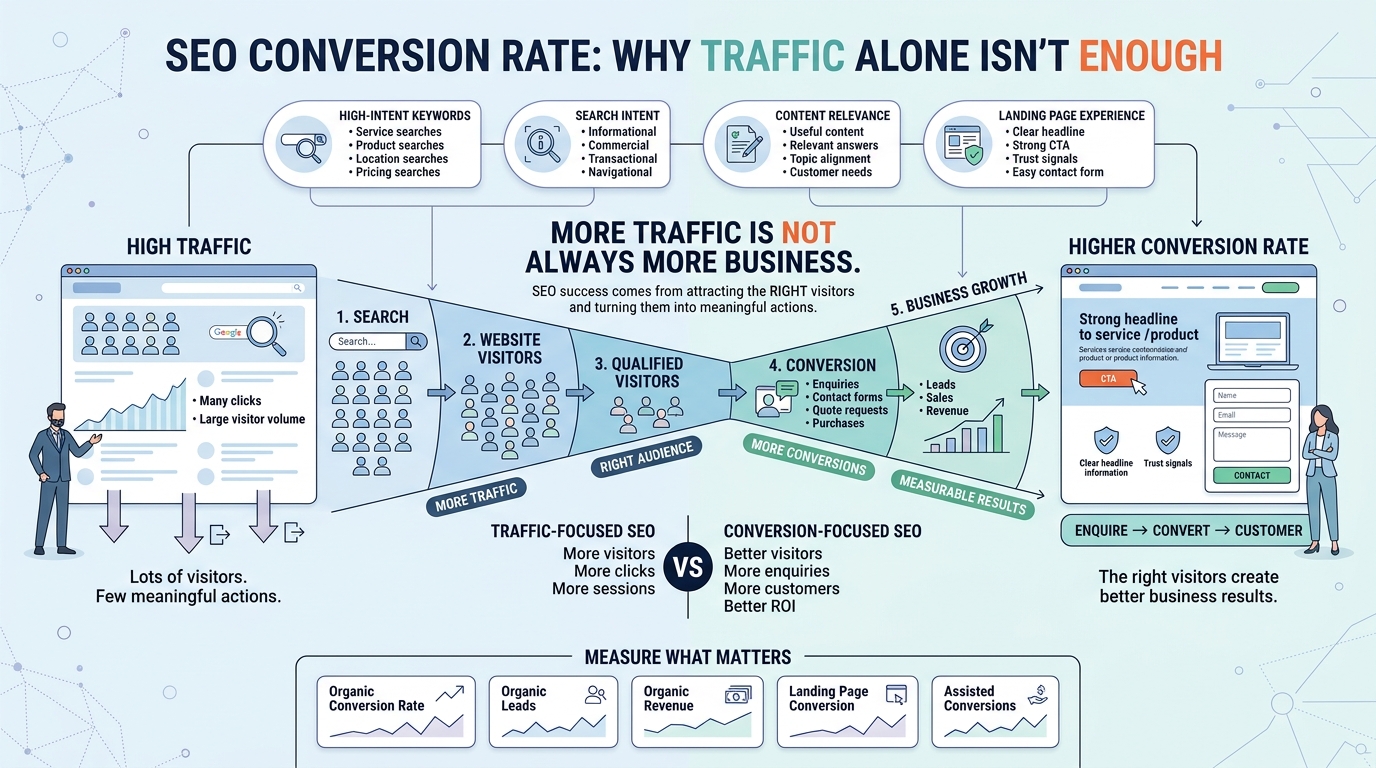
Traffic alone does not grow businesses. Instead, qualified traffic does. When you optimize for search intent in SEO, you attract users at the right stage of their journey.
As a result, benefits include:
-
Higher engagement
-
Lower bounce rates
-
Better lead quality
-
Improved conversion rates
When users feel understood, trust increases. Therefore, intent optimization becomes both an SEO strategy and a growth strategy.
Common Search Intent Mistakes to Avoid
Even experienced marketers make intent mistakes. For example:
-
Targeting high-volume keywords without intent analysis
-
Using blog posts for transactional searches
-
Over-selling on informational content
-
Ignoring changes in SERP behavior
Search intent evolves. Because of this, content must be reviewed and updated regularly to maintain rankings.
FAQs
What is search intent in SEO?
It is the reason behind a user’s search and what they want to achieve.
How does search intent affect rankings?
Pages that satisfy intent perform better due to stronger engagement signals.
Can one keyword have multiple intents?
Yes. This is called mixed intent and requires careful structuring.
Is search intent more important than keywords?
Yes. Intent determines how keywords should be used effectively.
Conclusion
Understanding search intent in SEO is no longer optional. Instead, it is essential for ranking, engagement, and conversions. Search engines reward content that solves real user problems.
By aligning content with intent, websites attract better traffic and achieve more consistent results. Therefore, businesses that want sustainable SEO growth should prioritize intent-driven strategies.
Outbound authority link suggestion:
Link to Google Search Central or Moz article about search intent.
If you want to improve content strategy further, working with experienced SEO professionals ensures your website aligns with both search engines and real users.